So my Amazon Associates is no longer working. So if you want to pick up this title,
click here.
So this is one of my favorite entries in the Malazan Book of the Fallen. There are some great new characters who live, some amazing, honorable new characters who die, great drama, and as usual with Erikson's work, events occur which make every atrocity you've ever heard of pale in comparison. I think that is why Memories of Ice sticks with me so vividly. My second reread was not easy. It's as heavy as Deadhouse in its own way, and I had to read some lighter works in between. But the imagery is dark, and those who are good, are so heartbreakingly good as to inspire in a way that real people cannot.
I remember from my school days reading
Chaim Potok's The Chosen and learning about a concept in Judaism that I always loved. In it, Reb Saunders is a tzaddik, one who suffers for the entire community. At least that's my definition. The Wikipedia definition involves the Kabala and notions of purity that I'm uncomfortable with.
Memories of Ice is filled with suffering, and one character is charged with accepting the suffering of two entire peoples. Why am I so enamored of this concept? I suppose because I think from day to day, most of us detach ourselves from the suffering that is ever present in the world. We have to do so for our own survival, though in many cases it is for our own convenience. That such men and women can exist that can feel for others to this degree is a beautiful idea. Though perhaps, mere acceptance and benign willingness to receive it is not very helpful to those who are in need now. It was this concept that so drew me to my wife, who would see the ads of suffering children on the TV and start crying in empathy.
At anyrate, I'm going to continue, as I have thus far reviewed the Malazan Book of the Fallen, by simply discussing topics of interest. As usual, if you haven't read the book, or are leery of spoilers, DO NOT READ AHEAD!
Topic 1: The
Bridgeburners are back! After an incidental appearance in the second novel, the
Bridgeburners themselves are more central to the story in
Memories of Ice.
Erikson has very cleverly built up the reputation of the Bridgeburners. He shows the trust and admiration that the rest of the soldiers have for these old timers in small ways. A soldier is startled to learn that one soldier is the illustrius Fiddler,
Detoran,
Hedge and
Trotts are reeled off as famous soldiers. In this way, the epic's name "The Malazan Book of the Fallen" is very apt--it is a scrapbook of famous soldiers. And so in the last 100 pages of the book, when the unit is decimated in the fall of Coral, it feels like I lost some family. The importance of the soldiery, particularly of the
Bridgeburners, cannot be understated. The soldiers' black humor, pithy commentary, and sage advice gets the reader through some of the more hellacious moments in the book.
 Topic 2:
Some mysteries resolved. The first two books of this epic have referred to an overall baddy, and that baddy is finally given a shape, a voice, and a name. He is the
Chained God, the
Crippled God, and for a villain, he is BAD ASS. He was a god to another realm, lured to the aid of a troubled city-state undersiege. Unfortunately, bringing a god to another universe requires some fell magics, and those magics destroy the city, melt the entire continent, and leaves the Chained One, severely crippled. However, still powerful, massively ticked off at his predicament, he is chained to the sleeping Goddess, Burn, who sleeps beneath the earth (who is in fact, the earth) by the most powerful ascendants on the planet, including our friend
Anomander Rake. But that all happened thousands of years ago. But the point is this: The
Crippled God is an alien, and as such his power is a different type from what our ascendants are used to--raw Chaos.
I love Chaos and Order as themes in fantasy, I've always thought that L.E. Modesitt's treatment of it in the Magic of Recluce was excellent, a very biological view of the world. Order bounds chaos, but the energy inherent in chaos is also life sustaining, when properly order bound. I digress. This is not the rubric Erikson uses. Chaos is a tainted force, and he uses it to tell us more about how the magic of the Malazan world works. Magic is based on a system of warrens, which are different worlds. Warrens can be used for travel, but they also have certain properties that can be harnessed for casting destructive magics. It is not entirely clear how this process works. Regardless, in
Memories of Ice, we learn that the Crippled God has tainted the warrens, and in so doing, he has poisoned the blood of one of the Elder Gods,
K'rul. Though the explanation seems somewhat convolouted here, it actually comes as something of a revelation. Certainly to some of the more powerful ascendants, who are old enough to know better.
 |
| By Lady Envy by Luktarig |
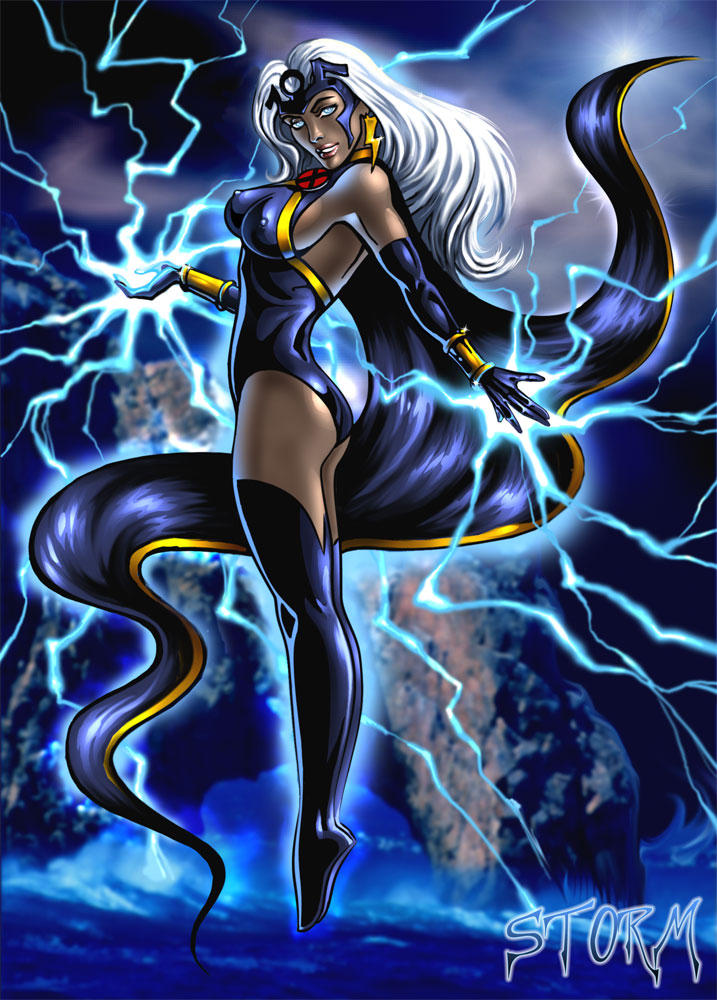
Topic 3: Lady Envy. I love
Lady Envy. First of all, the naming convention of the two sisters, Spite and Envy, is pretty awesome. Though Spite does not necessarily appear in Memories of Ice. Envy is a beautiful and funny character. And though extremely powerful when angered, she does not come across as sullen or remote, as the female assassin, Sorry, from the first two novels.
Lady Envy is actually quite charming, and we get the picture that we'll be seeing more of her. I like this painting by Luktarig of her, but he did a particularly shoddy job of her legs. Oh well.
Topic 4: Burn's Sleep. When you open the first book of the series, you notice that it's dated 1157th year of Burn's Sleep. An odd way of dating things. But the explanation, is actually quite literal. Burn is an earth goddess, sort of like the sleeping dragon of yore on whom the world lives. However, Burn is taking a more central role in the story now.
Caladan Brood serves as the goddess proxy, and his hammer has the power to wake the goddess. A true doomsday device. Brood was a character in
Gardens of the Moon, though he was barely mentioned. He is a mercenary captain with an enormous hammer, an ascendant who has been a long time friend of
Anomander Rake. Oddly, I could find no internet art on
Caladan Brood. He is not a central character as yet.
Topic 5: The Return of
Tattersail. We knew she'd come back,
Erikson made it quite clear. However, her return poses new questions. She is not the woman she once was, a warm-hearted, vulnerable woman, the paramour of
Gannoes Paran. Instead, she is four people in one:
Tattersail, Belladuran, Nightchill, and born of the T'lan Imass.
Nightchill, who died in the first book before we e'er knew her, is actually a goddess in disguise, the sister of K'rul. Though we only suspect at this point. But Nightchill, was not a nice woman...not an evil woman, but a necromancer, and a her reputation as a Malazan High Mage was fearsome.
Belladuran, was her lover, another mage in the Malazan Mage Cadre. A very gentle soul, but there is little evidence of him in 'Sail's personality. More,
Tattersail, who started as a child, and grows to teenage in a few short months, is sucking the life from her Rhivi mother as she grows. This makes her something less than innocent, even though she is a young girl. And though her intentions are good (to help her Malazan allies) a number of mistakes and unfortunate occurrences make her character turn on a very dark path. In fact, her primary cause of existence is to end the Ritual of Tellann, which created the undead T'lan Imass. After thousands of years of warfare, these long-dead, undead warriors are tired, and want their torment to be over. Tatterail refuses!
 |
| Kallor, by Timett |
Topic 6: Kallor, the High King. I love the character of Kallor. One of the oldest memes, or Cliches in fantasy, is that of the High King. The myth of the High King is derivative of King Arthur, Lord of the Rings, and is also part of the Chronicles of Prydain. The High King is almost always a force of good. Jordan made good use of the High King myth in his Artur Hawkwing--another interesting portrayal of the High King cliche. Artur Hawkwing, though a noble hero in many respects, was a Napoleonic conqueror and reformer. He's also guilty of a massive pogrom against those who could channel the One Power. Kallor however, seems to have none of the good qualities of a High King, and is merely a twisted and evil opportunist. He had amassed an entire kingdom, and ruled it ruthlessly and tyrannically. And when the Elder Gods attempted to intervene on behalf of humanity, he raized the entire continent. Which provides another answer to another mystery. K'rul removed the ravaged continent from the world, and created an entire warren to hold it. What we are lead to believe is the ashen and dead, Imperial Warren. The gods punished Kallor for his sin, and cursed him to live as an ascendant without granting him the powers or immortality of one. Despite Kallor's cruelty and to the betrayal he perpetrates at the end of Memories of Ice, he is a fascinating character, and one to watch. Spiteful, cynical, and cruel, he is still an imminently believable character.
Topic 7: Kruppe v. Brood, Deathmatch! This was a truly excellent scene. For over a thousand pages, we've been subjected to Kruppe's meandering, circular, and misleading dialogue. In contrast, the Warlord
Caladan Brood is eloquent in that he carries a big hammer. For hundreds of pages we've wondered at this absurd power Kruppe seems to wield. He's not a magician, he has no warren to wield, nor is he religious and belonging to a god or cult. Instead, he's just brilliant, and its his brilliance alone which stands up to the test. So when
Kruppe's loquacious, and mischevious tongue infuriates the reluctant warrior Brood, the giant slams his God Waking Hammer down to the earth and creates a chasm. Which goes completely around the rotund little man. It isn't explained, it isn't clear, but it was glorious good fun to "watch."
Topic 8: The Mule. Yes, a real mule. This endearing character has been around from the first book, ridden by Kruppe on his way out of
Darujhistan, then living with the high priest of Shadow, Iskarral Pust. Each time, the Mule has been ridden by a comedic character, and not surprisingly, as we find out later, is anything but a mule. My guess is that the Mule is actually the god of the sea,
Mael. Who takes great pleasure in unseating those of great genius.
 |
| In this famous Bridgeburners painting, Whiskeyjack is on the right. |
Topic 9: Whiskeyjack, His Leg, His Death. In my first read of the Malazan epic, I was as in love with
Whiskeyjack as Erikson must have wanted me to be. He was hard-bitten, a fierce warrior, a beloved commander, a gentleman, accomplished. But having read the series a second time, though I still look with great fondness on the character--I've realized just how little the author has given us to go on.
Whiskeyjack is only a character in a few scenes in the first and third books, and his death, though sad...well, we just don't know that much about him. In fact, it isn't until future books that we learn postumously about his life. That said, there are a couple of things that stand out about him: his protection of
Tattersail. As we've discussed, there is ample reason to distrust the child-god, but
Whiskeyjack, sees only the first half of that conjunction, and so when Kallor threatens her life, he responds with force, earning the High King's enmity. Later, when the Tenescowri witches have been rounded up, they're about to cast an awful spell, but he executes them himself because rather than have
Anomander Rake slay them with his sword
Dragnipur, a promise of eternal suffering. Before we move on to the betrayal that kills him--we must touch upon his leg. Erikson uses a very obvious Achilles Heel cliche, the Fatal Flaw cliche, or to use the Greek,
Homartia. From the
Siege of Pale to his death at
Coral,
Whiskeyjack has been plagued by a simple injury, a bum leg that was never healed correctly. Given that the magics of the Malazan Epic could easily correct this, it becomes almost a series joke. Mallet, the squad surgeon, asks him if he can take a look at "that leg" and
Whiskeyjack always refuses, he's too busy, or his men are in worse condition and need Mallet's talents more than he. Which leads us to the death of
Whiskeyjack, and the end of the Bridgeburners. When Kallor shows his hand, that he is indeed a member of the House of Chains, Whiskeyjack stands in his way and duels him. And of course, he fights well given the almost-ascendant nature of the High King, but the duel ends abruptly when he lunges on his bum leg, and no surprise, collapses on it. Kallor impales him, and the Malazan legend dies.
 |
| Korlat, by Dolemn+, Deviant Art |
But not before he is allowed to pursue the greatest of human endeavors, to love again in midlife, with the beautiful Tiste Andii, Korlat. Of course, what makes death so unbearable, isn't that it signifies the end for the victim, but that it represents an end for all who remain. Korlat's grief at having loved for the first time in millenia (she's immortal) Quick Ben, and the other Bridgeburner's grief at losing a valued commander, and friend. It is witnesses their grief which makes the Death of Whiskeyjack so poignant.
Topic 10: Heboric Light-Touch
Though
Heboric is not in Memories of Ice, several events are commented on within it which help solve some of the riddles posed in Deadhouse Gates. So the former historian was a priest of
Fener (The God of War), who was unjustly accused of something. The punishment for that something was to have his hands sawed off.
Anomander Rake however, reveals that the priest of Fener was highly ranked, and was probably set up by a Claw (the empress' master assassins) in so doing, the unjust ritual corrupted the act and put Fener at risk. The God sealed those hands (the tattoing in Deadhouse) and eventually, Heboric would die and be reunited with his hands, whereon he would become an avenging angel of some kind. In most writers this sort of thing would be a stretch, if not absolutely inconveivable. Contrary to popular opinion, even fantasy has to adhere to some rules--namely--its own. But due to the size, complexity, and timing of this revelation. I bought it completely, and was even gratified to understand what had taken place in the earlier novel. To top it all off, Heboric's contact with the Jade pillar, which is somehow connected to the Crippled God (more of that in
Midnight Tides) destroyed Fener's seal, and pushed the God into the mortal realm! Wowee Zowee!
 |
| Gruntle, by Merlkir at Deviant Art |
Topic 11: Redeemed Drunks
I thought this an interesting topic because Erikson is a big fan of the anti-hero. That's right, remember your 9th Grade lit classes. An Anti-Hero is one whose great potential is marred by his own tragic excesses or personal flaws, and who is offered time and time again, a path to redemption, but never seems to take it. Anti-heroes are difficult characters to draw in fantasy since the arc of a character can go for thousands of pages. But the two characters I have in mind here are
Gruntle and
Coll, although later books drop a few other drunks into our laps.
Coll was a
Gardens character, a noble who had lost his title to a conniving prostitute, and devolved into drunkenness. He was "rescued" by his friends in Darujhistan, but really, it was redeemed by a conversation with Captain Paran--another anti-hero, where he decided that he wasn't ready to drink himself into oblivion quiet yet. Our new character, Gruntle, is a Memories of Ice character.
Gruntle is a caravan driver, and mercenary captain who is chosen to be the Mortal Sword of Trake, (the ascendant who becomes the new God of War by book's end.)
Gruntle is into doing his job and getting out. A real Han Solo. However, in getting his employer and team to the city of
Capustan, his best friend is killed. He takes it hard. Really hard. In fact, in this one instance I find Erikson's decisions a little poorly justified. Drinking yourself into oblivion after a friend dies, even your best friend, is hard for me to believe. Particularly because that friendship isn't particularly well fleshed out, nor does the dead friend seem to have a deep connection to the man. However, Gruntle is a real alcoholic. And, I guess more to the point, he's done this before. So after reaching the city, he goes on a drunken binge that lasts the entire course of the novel. However, it is Gruntle's heroic visage which adorns the copy of the book, so you know he's going to pull out of it. And he does so, only when the city's walls are breached by the Tenescowri. A Seerdomin (an enemy captain) rapes his other best friend (and casual love interest)
Stonny, and
Gruntle goes beserk. His killing frenzy calls upon the ascendant Trake, and feeds his ascendancy, even while
Fener's Destriant is killed defending the same city. However, it is difficult to say whether or not Gruntle is actually redeemed by the book's end. He climbs out of the bottle, and again becomes theornery caravan driver who just happens to be the hand of a god. Unlike
Coll, there seems to be little character growth for
Gruntle.
Topic 11: The Missing Tribes of Tellann
 |
| Trull and Onrack, Onrack is T'lan Imass, by Slaine69 |
Almost from the get go, one of the most interesting aspects of the Malazan world is the presence of the
T'lan Imass, an undead race of people who sacrificed their mortality so that they could enjoy a senseless eternal war against the
Jaghut. One of the reasons that the Malazan world is so dense is that the reader is dealing with hundreds of thousands of years of history. Remember that Erikson was an anthropologist. He knows all about early peoples, and phylogenetic trees. Both of which are incredibly relevant. As my wife is an Ph.D in Anthro, it just so happens that I know a little bit about these things myself. The Imass, are defined as one of the original three races, the Forkrul Assail, the T'lan Imass, and the Jaghut. The Jaghut were hunted to extinction by the Imass, and know one really knows what happened to the
Forkrul Assail. However, it is given that humanity is generally derived of Imass stock. Splitting into a dozen tribes and peoples in their ceasless quest to rid the world of Jaghut. The Imass are the younguest of the three peoples, but their own history goes back about 400,000 years. This is relevant because nearly a half a million years of evolution has passed between then and now. And the descendants of the Imass (those who didn't join the ritual to become undead, are human. Though
House of Chains goes far more into depths about the history of the Imass. Memories of Ice shows us two things: 1) The current war against the Pannion Seer is a direct result of this ancient war between the Imass and Jaghut, and 2) We first learn that the Imass as a people have modern descendants, the Barghast, who are more closely related to them genetically. Think of the
Barghast as maybe a more intelligent Homo Habilis. Above is a picture of a character from House of Chains, but it is the best representation of a T'lan Imass that I've seen. Note the enormous flint sword, which is a ritual weapon typical of these undead warriors. The T'lan Imass were born in the "Stone Age" of the Malazan world.
Topic 12: Silverfox and Captain Paran
 |
| Captain Paran by Dolmen, Deviant Art-though I pictured him slimmer |
So one of my favorite characters is
Captain Paran, sort of the classic fantasy hero: young good looking male hero type. And after a hiatus in Deadhouse, he's back. Now, his run ins with various entities of great power, including a hound of shadow, have made him something more than human. And fate has a new role for him to play. Meanwhile, his lover
Tattersail, now
Silverfox has matured into a young woman. Yet, their meeting, though a poignant one, is filled with a bitter distance.
Silverfox is on entirely new level of power, and Paran, just learning his new role as
Master of the Deck is uncomfortable with the two other wizards stored inside this girl. Also, Silverfox possesses an entirely different set of issues, described in part, above. I'm not sure what I wanted from this meeting. Romance is a necessary part of fantasy, though not, I believe in science fiction. It doesn't have to be a vast sweeping love story, but
Korlat and
Whiskeyjack's love story adds character color and poignancy to a world torn by war. But, there are many books left to go. Though Silverfox and Paran's parting was cool, much can happen in 20,000 pages of writing.
Topic 13: The Painter and the Toad.
So we have two new characters who make a brief yet intriguing debut in Memories of Ice.
Ormulogun is the official painter of the Malazan Army. I like that the Empire has official historians and painters. These are the sorts of details that are often overlooked. Court painters were common, and even now, I suspect the U.S. has a portrait painter for each American President, though the thing now seems to be photographs. At anyrate, though
Ormulogun's appearance in Memories is small, you get the sense that if mere experience can guarantee magical powers, than the court painter of the Malazan Empire, must have some kind of power. Not the least of which, is a caustic talking toad as his familiar or "art crtic." The exchange between them was definitely one of the funnier in the book.
Topic 14: New Enemies-The Tiste Edur
So, while the
Pannion Seer's terrible reign is destroyed in Memories of Ice, one is informed consistently, that this war, terrible as it is, is not the main thrust at all. Erikson does a good job of very slowly introducing the real enemies. The
Tiste Edur. As you may recall, The
Tiste Andii, are the children of Mother Dark, and are a race of black skinned white haired people who are long-lived powerful fighters and magicians. They almost match the Drow in description. The Tiste Andii are lead by Anomander Rake, and function largely as a force for good, though Rake's justice is a rough one. The Tiste Edur, are the second offspring of mother dark, the first being the
Tiste Liosan, of whom we know nothing in Memories. They are shadow, born of the interplay of Light and Dark. We know little of them, save that they had a massive battle on a submerged and destroyed warren, where the single surving ship is a refitted Malazan vessel, manned by undead Tiste Andii. That ship, undead as it is, comes back in almost every novel. A truly spooky invention. The undead warriors man the oars, and their heads, still living are piled up on the front deck of the ship. At anyrate, the Tiste Edur are a mystery that is first proposed in Memories.
Topic 15: No End in Sight
One of the cliche's in fantasy is that the end is almost always predictable. This isn't a bad thing. We want good to win out over evil, and fantasy is about character redemption and growth, so how good wins over evil is really the more important question. However, this is one cliche that Erikson has managed to sidestep. Even the evil Chained God, the Crippled God, has likeable qualities. He purposely chooses the maimed, the corroded, the ugly, the insane, the leftovers and detritus as his servants. Given our natural proclivities of choosing that which is beautiful and pure, that there is a god for the less perfect, isn't wrong. And in fact, the god himself was wronged from day one. Anyway, all that aside. At the end of Memories of Ice, we know that the real bad guy is the Crippled God, but we still know so little about him and his agenda, that is impossible to say how the saga will end. Well played Erikson.
Topic 16: Dragnipur
As I've riffed on before, magical items, and magical weapons are a staple of the genre, and Dragnipur is the ultimate accessory. We learn a lot about it in Memories of Ice. We know that
Draconus, one of the Elder Gods who cursed The
High King Kallor, was trapped within his own weapon. Those who have been slain by
Dragnipur end up in the sword's own warren, chained to a wagon that they must pull forward for eternity. Draconus reveals however, that there is something pursuing the sword, and those who have been chained by it. And it is Chaos, or the Crippled God. Draconus urges Paran to tell Rake to use the sword more often. That the sword needs new souls to pull its heavy load from the pursuing Chaos. Of course, the other option, as with any good doomsday device, is that the sword must be destroyed. Rake has slain some of the worst demons of all time, and should Chaos reach the wagon, the worst of these creatures would be freed to wreak havoc.
Topic 17: The Tenescowri
The Tenescowri is one of the most horrific inventions of fantasy I've ever heard of. The Pannion Seer has created an army of peasants, and rather than feed them, he supplies no food, but instead has his priests encourage the peasants to eat the inhabitants of the cities they assault. It is absolutely disgusting. Worse, the women of the Tenescowri are likewise encourage to mount the dying on the battlefield, hoping to get pregnant. Their children become the Children of the Dead Seed, and are the creme de la creme of the peasant army. One such creature, named Anaster leads the Tenescowri.
Topic 18: The Return of Toc the Younger
Lady Envy, mentioned above, finds Toc in another warren, passed out, and wakes him up. This provides a nice resolution to the Toc story, who was thrust into the warren by the insane mage Hairlock in Gardens of the Moon. Toc is a typical Erikson character, a genuinly good human being. Though he is fact trained as a Claw, and thus serves as one of the Empress' trained killers. However, serving in One Arm's Host has re-converted him to the good side of humanity. Unfortunately, his fate in Memories of Ice is just awful, and shows that it don't pay to be good. I was sad that Erikson torments Toc in this way, and though Memories ends with hope that Toc will return, I admit that it's a dim hope.
Topic 17: The Death of Itkovian
I intend to make this one a Best Moments in Fantasy post, so I'll leave it, and this post to one simple fact. Itkovian is awesome, and his death, like his life proves what I've always believed about humanity. That good is real, and possible, and that it is something that we all must continually work to be, to improve upon, and to love all, and as many as possible, without reservation.


 I've wanted to review some classic fantasy for this site, and I got my chance to reread this book when Tor.com dropped a free epub of the second book in the Recluce Saga. I remember reading it as a teenager and loving it, but many many things change between one's idealistic childhood and one's adulthood. And in this case, my enjoyment of the Towers of Sunset easily doubled in the intervening years. For two reasons: I like depictions of realistic relationships, and while medieval and medieval styled relationships were no doubt different in many ways, the subtleties of understanding between the sexes are always well developed in the realm of Recluce. The second reason, of course, is my devotion to economics and the study and display of economics in fantasy literature. That said, I can see this as a possible turn off to many readers. In my attempts to sell my own work, I've found some who think economics are boring! And I'm not even talking microeconomics, replete with equations and variables and charts, they find the macro stuff boring!