Search This Blog

Showing posts with label The Barbarian. Show all posts

Monday, October 5, 2015

Halfling's Gem by R. A. Salvatore

Given the empire of Forgotten Realms fiction that R.A. Salvatore has put upon this earth (nearly 22 novels), you'd think the first three novels of his would be classics. Forbes did a great interview with the author, and in it Salvatore gives us a plausible reason for this:


“You don’t have to start at the beginning,” he tells me. “Contrast that with George Martin or Robert Jordan and the way they did their series. You couldn’t pick up the sixth book of Wheel of Time and read it, I don’t think, if you hadn’t read the first five. With the Drizzt books you could pick up the 6th book, the 10th book, the 15th book, the 20th book. It’s more like Sherlock Holmes or James Bond.”

Of course, that is the very definition of pulp fiction, and why Martin and Jordan are hailed as serious authors who shook up the world of fantasy fiction.

Halfling's Gem was an atrocious train wreck that I barely feel deserves a review. Not as bad perhaps as Spellfire, but up there.

Halfling's Gem concludes the Icewind Dale Trilogy. The plot continues the drama between the Calishite assassin Artemis Entieri and the dark elf Drizzt Do'Urden, as they fight over possession of a Halfling thief. Also appearing for the first time, the man who put the price on the halfling's head, Pasha Pook.
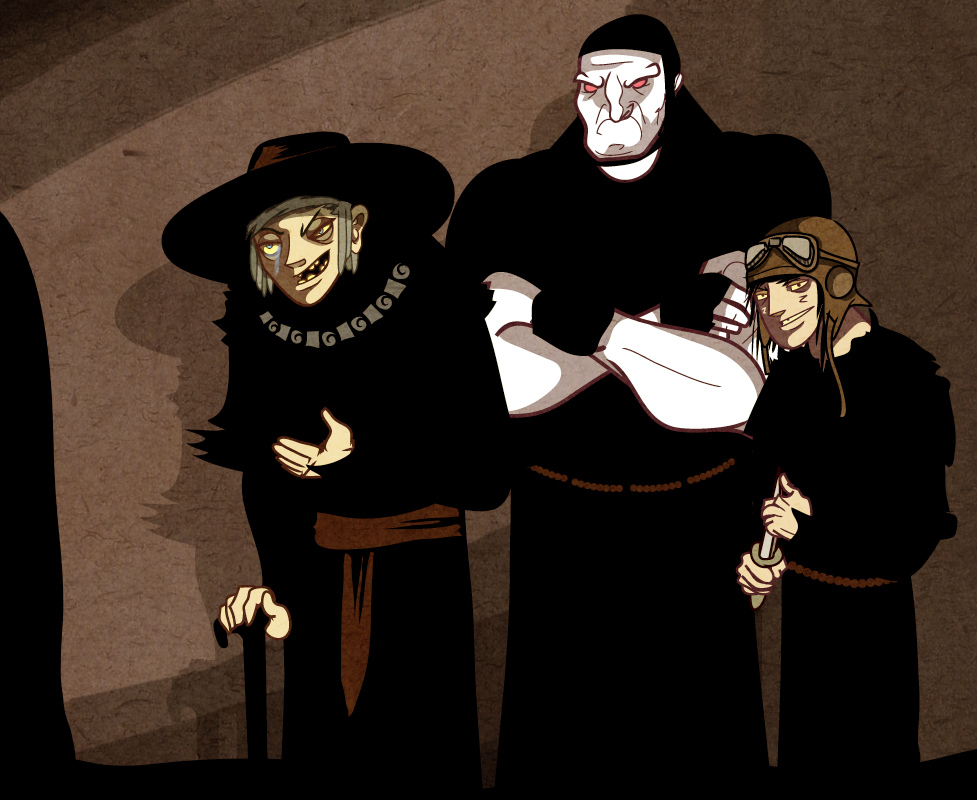
Artemis Entreri


The plot ... is ok. Where this book repeatedly fails is in the juvenile level of the text. Juvenile isn't quite correct because even teen literature is often more nuanced.

Character: Halfling characters get the worst treatment. At least Douglas Niles and Kate Novak used female dwarves and halflings. The D and D rules made these characters pretty limited but creating an interesting back story could have at least made Bruenor more palatable. So SPOILER: Bruenor is assumed dead at the start of the novel having ridden a flaming dragon into the abyss. And a neat part of the book is the discovery and fight through the abandoned city, but for whatever reason Salvatore spoils the surprise for his characters and has the all knowing and all powerful Drizzt realize long before the reveal that Bruenor may yet live. Salvatore had a chance for his characters to explore the very real emotions of raw grief, and he shied away from it to point out, yet again, how cool Drizzt is.


Wulfgar is also pretty terrible. We discussed in my review of The Blade Itself the Barbarian cliche. Wulfgar is that cliche, no twist, no subtlety, if you wanted to describe the Barbarian cliche in one word, that word is Wulfgar. The emotions that Wulfgar feels are simple: love, anger and grief. About as skin deep as you can imagine. Grief is not the mere absence of that which is held dear, it is the cacophony of successive failures, missed opportunities and piercingly poignant memories replayed continually within a mind unwilling or incapable of stopping itself.

I guess what I'm saying is that Salvatore keeps telling us when he should be showing us. A classic writing criticism.  This was 20 years ago, I'm hopeful that Salvatore's technique has been honed by 20+ books.

Last, we have Drizzt, in the second novel in the trilogy we learned that he felt his meeting with Entrieri to be a fateful one. That there was a strange connection through skill of arms with the assassin. While this morbid curiosity might have added a dimension to Drizzt's personality, it fails as Drizzt is forced to utter trite truism after trite truism.  It's sad because I've begun to suspect that Drizzt is actually a fairly deep character. For example Drizzt is offered a magic mask that makes him white. And he uses it because people fear the drow. But he comes to quite enjoy the anonymity and access the mask allows him. The notion of "passing" is an extremely loaded one for African Americans and its place in this banal fantasy novel is notable. Another moment has Drizzt stealing a kiss from the unconscious Cattie-Brie. A kiss which is never addressed again. 

As a general rule: If you were to strike every single line of dialog from the book, it would be immeasurably improved.

Cliche: all the usual D and D cliches apply, so I won't waste any time but to list them: Dwarves, halflings, elves, Dungeons and Dragon's Race Cliche, barbarian.

Some new ones include The Kidnapping, the Middle East and the Thieves Guild.  The Kidnapping is pretty self explanatory: it's a common fiction cliche, helpless child/girl/Halfling taken by force on a long journey, vengeful heroes hot on the trail, always close, but never quite catching until the final pages. One difference here is that the Heroes give up catching the assassin fairly early on and simply make for the final destination. One famous example of the Kidnapping motif would be from Tolkien's Two Towers when Pippin and Merry get taken by the Orcs.
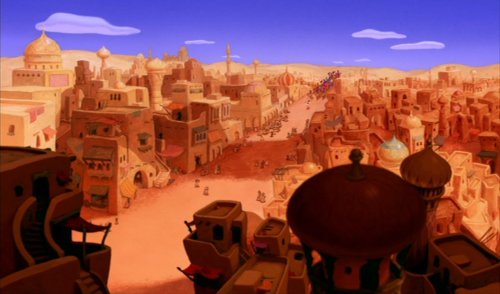
Agrabah, or Calimport by Disney
The Middle East cliche  is a common one as well, Calimport is clearly a middle eastern city, and it's denizens, though magical (halflings, humans and wererats follow the same dress and speech patterns. This type of Orientalism would be offensive to some, but the point of the cliche is to save time and space. Calling to mind a westerner's idea of a 1300th century Middle Eastern city provides leagues of description without straining the readers imagination.  As I get older, and my anthropologist wife teaches me to be more sensitive to and less tolerant of micro aggressions that form the undercurrent to overt racism, I begin to wonder about such tropes, and I begin to understand why so many authors have attempted to create whole new worlds, absent of these cliches.
The internets are loaded down with Skyrim images.  Best I could come up with.

The Thieves Guild cliche is an incredibly common one in fantasy.  One the one hand it gives voice to a real world occurrence in a fantasy world, that of organized crime, and on the other hand, it speaks to the shadow economy that likewise exists in every city and state, the sale of untaxable, untrackable, and unregulated goods.  One thing that the Thieves Guild cliche does frequently in fantasy, however, is to neuter the more dangerous and pyschopathic elements of such a community.  To Salvatore's credit, his thieves guild is pretty despicable.  Pasha Pook the crime boss of Calimsport runs the guild with the aid of three henchmen, a dark wizard (fairly servile, as evil wizards go) the deadly assassin Entrieri, and a runaway pack of were-rats.  Though the subplot in Halfling's Gem of trouble in Pasha Pook's organization is never really explored or prevailed upon in any major way, it does give voice to the fact that such an organization would be almost impossible to govern.  But If you're looking for fantasy mafia stories to thrill and awe you, leave Halfling's Gem on the penny shelf, and pick up Scott Lynch's Gentleman Bastard trilogy.


Completeness:  Sadly, I think Halfling's Gem is not the end of this pitiful story.  As the action closes and the heroes sail away righteous and victorious, we know a larger battle is on the horizon as the dwarves of clan Battle Hammer are massing to retake the mines of Bruenor's father.  Still, this story does wrap up the unexplained nature of the halfling's powers and the mystery of how he obtained his magical gem.  It also sheds further light on several new areas of the Realms.

As I become more home in the world of the Realms, I see that there is very little overlap or common knowledge.  Virtually none of the stories I've read or reviewed so far even occur within the same thirty year period.  While, this excites me on some level to know that the breadth of the history of this place is huge, it also feels sloppy and haphazard in the retelling.  I have attempted to follow the date of publication for these books rather than take a timeline version of the books approach.  I chose that route because I want to see the vision of the realms as its actual creation was occurring, not as a second-guessed, revised version.  However, this choice has lead to some frustration on my part.  Right now the only common element is Elminster, and he's kind of crotchety and fallible for an Old Wizard type. 

On the whole, I'd say feel free to skip the Icewind Dale Trilogy.

Sunday, August 2, 2015

The Blade Itself by Joe Abercrombie

The Blade Itself is a phenomenal fantasy novel, blending elements of Conan the Barbarian, Jane Austen's 19th Century English romanticism/ victorianism, and a Glen Cook style of magic and majesty. As you know I reviewed Abercrombie's Half a King recently. I was nonplussed, the novel was entertaining but not what I'd been promised. My biggest complaint by far was the lack of detail. I wanted the novel to be 200 pages longer. Weighing in at over 500 pages, The Blade Itself is exactly what the doctor ordered. The level of detail is majestic. Characters are never simply speaking, they are talking while trimming blisters, emptying the chamber pot, or suffering terrible indigestion. It's mundane details like these that really make a novel come alive.  So once again, I must eat crow: Abercrombie is everything I was lead to believe and if you like epic fantasy with a dry touch of humor this book is a must read.
Logen Nine Fingers, Found on Cuded.com

Characters: the characters in the Blade Itself are excellently drawn. The Barbarian, Logen Nine Fingers is constantly surprising us with his sensitivity, intelligence and laconic wit. Each narrator in the book has one or two modus operandi phrases, a technique used very effectively by Abercrombie to create very distinct individuals. In Logen's case, the lines are "I'm still alive!" And "you have to be realistic about these things."  The first is shouted at the top of his lung, or muttered quietly after every violent encounter, not in some balls to the wall defiant war cry, but an honest to goodness, joi de vivre. Unusual  and greatly endearing for a barbarian known throughout the land in bloody song and story. The second phrase is muttered frequently in resigned acceptance of the most horrendous if fates, whether he's dangling from a cliff or running from twenty armed men.

Inquisitor Exempt Sand den Glokta is a beautifully written character. And a fantastically original one. How many ex-playboy, swordsman, dandies, tortured for six years and turned crippled at
Inquisitor Glokta by Sirheartsalot Deviant Art
the age of thirty do you see in fiction, fantasy or otherwise. Add to that the fact that the man has turned his experiences in the dungeons of the Empire into a new career and now tortures people for a living.  Think about how fucked up that is. And yet you still like him. Really. It's not just pitty, it is his wit and hatred of his entire society that makes him such an enjoyable character. His words: Why am I doing this? Uttered every day when he sees his arch enemy: the stairs. And: "body found floating in the bay..."  That said, as a raging liberal, and a generally caring individual, torture scenes are particularly trying for me to read.  I don't question Abercrombie for his use of these scenes, afterall, "you have to be realistic about these things," and Abercrombie makes it dreadfully apparent that the tortured will sign anything to end the torment.  Still, the scenes can be extremely discomfiting, so reader beware.


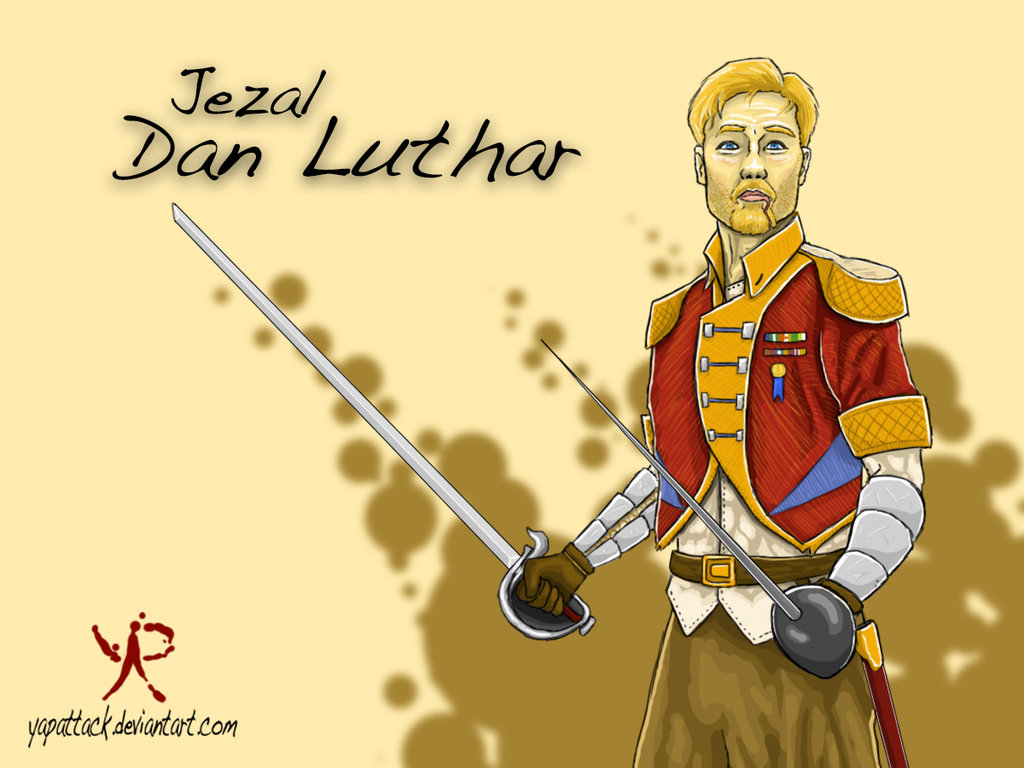
And then there is Jezal. A nobleman of the worst variety, a young man training for the Contest, a yearly fencing event that eager gentlemen throughout the Union engage in because winning brings fame and place within Union society. Hating Jezal is a given, even at the novels' end after (SPOILER: ) falling in love with a commoner, he still thinks the common soldier is beneath his notice. Still this classicism is so British that it adds a marvelous layer of reality to the novel. While kings and peasants are the bread and butter of fantasy, it is a rare novel that doesn't use some sort of diamond in the rough trope allowing the commoner to advance within society without facing the scorn of his betters. We like Jezal too, though it is unclear, aside from playing Mr. Darcy, what role he has in the action packed saga about to unfold.


Cliche: First there is The Barbarian. Logen is a man of the north. A common cliche in fantasy, most popularly used in Game of Thrones, as the peoples who live beyond the wall. Savage, scarred, filthy, wearing skins and uneducated. Think the Goths and the Visigoths and you won't be far off. Conan the Barbarian as envisioned by Howard is also probably the seminal work of Barbarian fiction.  Steven Erikson, as I've linked to before, has a neat essay on the concept of the Barbarian in fantasy.

Next there is the Old Wizard cliche: represented by the First of the Magi Bayaz. While Bayaz has no long grey beard or pointy hat, he does have the arrogance and the long lifespan of those who practice the art. Of course, Abercrombie puts his own twist to the cliche. Bayaz looks like a blacksmith and so far, no lightning bolts or fireballs. I won't spoil the magic for you, but it's there, and it's tastefully done. There is something off-putting about Bayaz.  Something vaguely distasteful, almost disingenuous about Bayaz.  Like he doesn't believe his own platitudes. 

Another new cliche for us is the First Law cliche. There is often something tongue and cheek about the First Law cliche, perhaps because speaking directly to the reader requires a deft touch, else it sound ham fisted and trite. It is a set of laws or principles which govern the system of magic, or other secretive or cliquish gathering.  Here the First law is that it is forbidden to touch the Other Side or speak with devils. The first law doesn't have much significance in this volume, though the second does, "it is forbidden to eat the flesh of humans." Other fine examples of the First Law cliche exist in the Wheel of Time, both in the repeated catechism against the Shadow, or in the rules for embracing the Source. It's a cliche, that done well, adds a sense of realism to the world, after all we do live in a world of laws and too often fantasy novels dispense with such mundanities.

The Middlemarche cliche. I've already mentioned it a bit, in my reference to Austen's Pride & Prejudice (the Pride and Prejudice Cliche just doesn't work as well)  the use of very classic forms of British class structure to inform the world. it's important to note that Abercrombie is British and as such has an implicit advantage over his Canadian and American contemporaries. In general I believe Erikson to be the leader of modern fantasy, but in this small aspect Erikson falls behind. Abercrombie's Jezal is so spot on detailing English snobbery it hurts.

The Evil Empire cliche and Migrating Other cliche: one thing I rather like about the First Law books and The Blade itself is that it has already painted two or three epic baddies who have nothing to do with the book's actual plot. This frees up the narrator to focus on the here and now while still allowing the book to expand into a series. I always hated the Wizard's First Law Books because the first two seemed like stand alone novels and the epic that emerged was appended to the first story with scotch tape. Not so here, we already have a variety of enemies and none of them are really central to any of the main characters. The Evil Empire cliche is often steeped in Orientalism, a West versus East, narrative. And while this is another racist element of fantasy as a genre, it remains, even today a pretty effective one: China and the Middle East remain bogeymen to most people and are great political fodder for applying motivational fear. In the Blade Itself we learn relatively little about the Empire. It is vast, it has a magical cadre of sorcerers known as Eaters, and it has a new, young emperor looking to earn his chops.

Then there is the King Beyond the Wall, a Mance Rayder type of baddy who is a Northman sweeping down to ravage the soft middle countries of the Union. This cliche is somewhat tired given the current popularity of Game of Thrones.
a Shanka, by rynomyte at Zbrushcentral

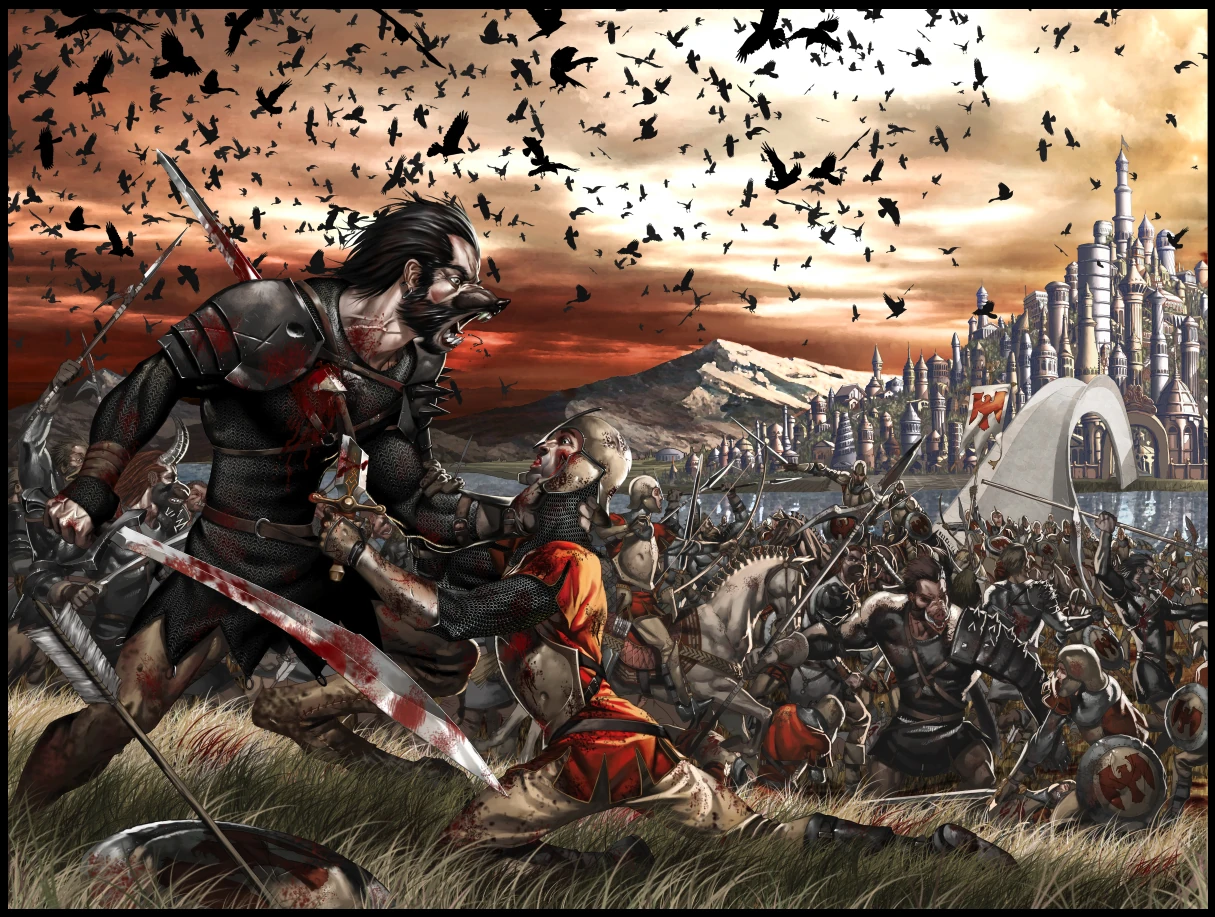
Last, there is a new cliche: the Migrating Other. History is a patina of competing movements of men, tribes coming north or south in droves and driving the current inhabitants further inland. The Migrating Other is the bad guy, even though he in turn flees another bad guy displacing him. In fantasy however, the Migrating Other can frequently be a race of non men, orcs or in this case the Flat Tops. Sanderson uses the Migrating Other cliche in the Way of Kings to describe the enemy with which the Kingdom is trapped in aimless and endless war.  The cliche by itself, though realistic enough, is generally not enough for fantasy. But, overpopulation, displacement, and finding food and resources simply does not provide the clear moral imperative that fantasy so often requires. So when used it's usually used in tandem with other cliches or as Abercrombie explains in the final pages (SPOILER) it is a race created by magic to serve as an army of destruction.

Completeness:Abercrombie has created a fully believable world with genuine, detailed characters. He also excels at the honourable mention: that writing technique in which a few lines of detailed text provides volumes of exposition. His listing of court lords and ladies is an excellent example of this. Though the Court has almost a non existent presence in the book, it still feels replete with characters that are differentiated, complete and ready to be picked up and exploited should the author need them. There's nothing more amateur hour then having a character added at the end to provide necessary information to end the story.  Also quite compelling its the idea of the Old Empire.  A great civilization destroyed by a war between magi, that has spent the following centuries in perpetual strife.
The fall of Manetheran, gorgeous, not sure whose image


The world feels completely fleshed out, easily a dozen nations are described or mentioned, though only three are relevant. Politics and trade seems real and even modern. As a fantasist with an interest in economics I was thrilled to see some discussion within the text of the economic relationships between provinces, the financing of the war with the Empire, a union bashing autocrat, and even discussion of crown and union debts.

Another delightful detail was in the small physical ticks the characters have: for example Logen Nine Fingers trims his blisters next to the fire, Marshal Burr has a weak stomach that causes him to burp unfortunately. These are the sort of details that really make a story sing.

But to top it all off. And I saw a reviewer (Mark Monday) on Goodreads mention this, the book is a truly funny read. It's dark humor, true enough, but the book is laugh out loud funny! Even my wife commented on my laughing while reading!

So, please give Abercrombie another chance, and my hats off to this new bright star in the realms of fantasy.

Saturday, February 7, 2015

The Wise Words of Karsa Orlong, House of Chains, Steven Erikson

So, in the Malazan world, a favorite character of mine, and of fandom, is the Thelomon Toblakai, Karsa Orlong.  The character change this of this behemoth blade-master changes much over-time, but even at his most barbaric, he speaks with a gravitas, that is always stirring.  Even the author finds Karsa an interesting study.  For Erikson's treatise on Karsa and 'the other,' click here.

This quote, from Steven Erikson's House of Chains, occurs as the Teblor warrior muses on the rebellion known as The Apocalypse.  He has thrown in his lot with the Apocalypse, almost by chance.  He abhors the rebellion's avowed purpose, and by now has come to admire the Malazan Empire somewhat.  These are his musings on the War of the Apocalypse.

And if you read my other blog, RavingLeftatic, you'll see why I excerpted this here.  All credit goes to the author, again, Steven Erikson.

by shadaan
"The notion of a life spent tilling fields was repellent to the Teblor Warrior.  The rewards seemed to be exclusive to the highborn landowners, whilst the labourers themselves had only a minimal existence, prematurely aged and worn down by the ceaseless toil.  And the distinction between high and low status, was born from farming itself -- or so it seemed to Karsa.  Wealth was measured in control over other people, and the grip of that control could never be permitted to loosen.  Odd then, that this rebellion had nothing to do with such inequities, that in truth it had been little more than a struggle between those who would be in charge.

Yet the majority of the suffering had descended upon the lowborn, upon the common folk.  What matter the colour of the collar around a man's neck, if the chains linked to them were identical?

Better to struggle against helplessness, as far as he was concerned.  This blood-soaked Apocalypse was pointless, a misdirected explosion of fury that, when it passed, left the world unchanged."
by slaine69 at deviantart