Search This Blog

Showing posts with label Old Wizard Cliche. Show all posts

Saturday, September 24, 2016

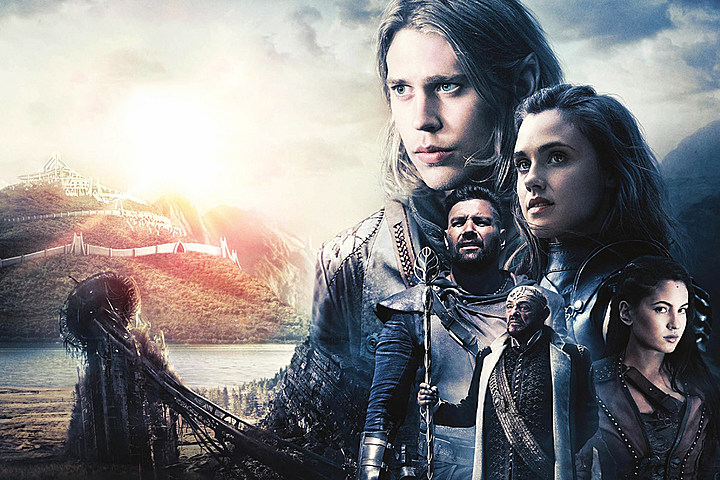
The Chronicles of Shannara on MTV, Season 1

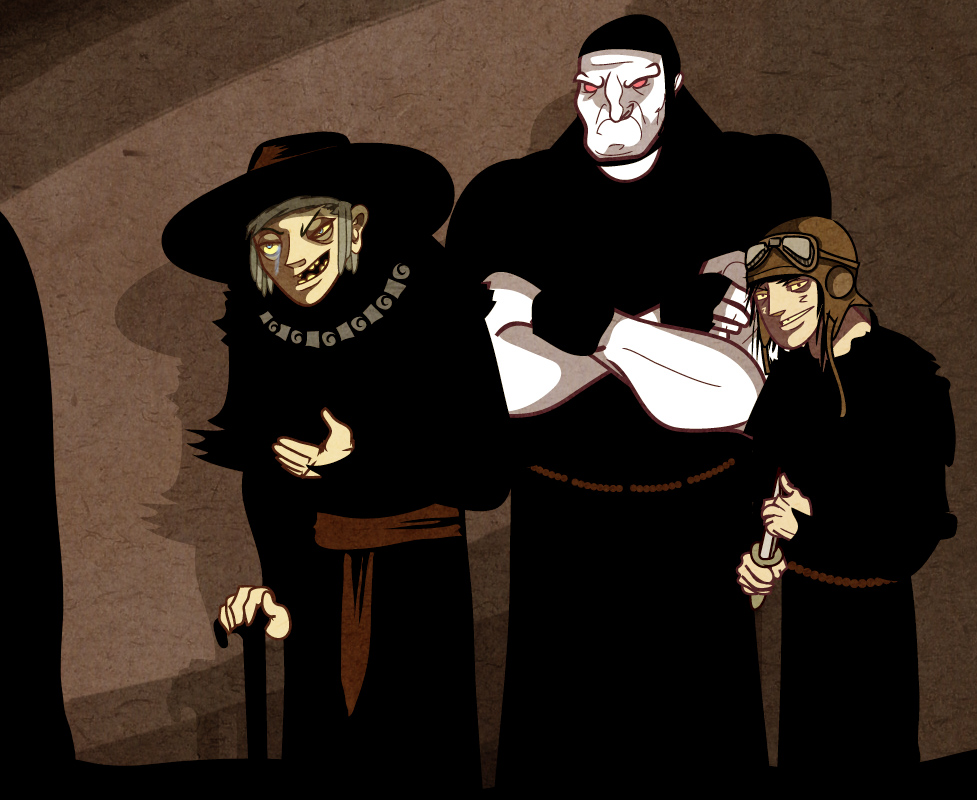
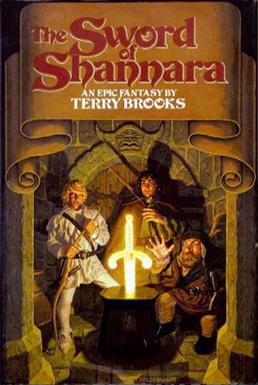
The Sword of Shannara was the first big fantasy novel I ever read. I still remember walking into the Walden Books on Main Street in the New England town in which I grew up, and sorting through the titles in their tiny fantasy section.  I remember the glowing sword on the cover.  I remember turning back to that cover again and again, trying to imagine the three main characters fleeing the Skull Bearers in that flight to to the Silver River.  I remember hiding the book in high school in that same New England town so that I wouldn't get teased by my peers.  I remember that same book being thrown around a classroom while I struggled to get it back like some scene in a John Hughes movie.
   When I heard that the Chronicles of Shannara was being produced, I contained my excitement.  It's a new dawn for fantasy, or at least, it is compared to what I grew up with.  Given the success of Game of Thrones, it was no wonder really that classic fantasy was sought after to produce.  In fact, a television friend of mine even asked me for some recommendations.  That was back before I left the center of the universe, NYC.
When I saw that it was MTV that decided to produce it, unlike some fans, I wasn't perturbed.  I liked "The 100."  Now that I'm officially old, seeing teen melodrama doesn't irritate me, it amuses me, and I admit a certain enjoyment of the eroticism in shows filmed to titillate the chattering class.  I'd been meaning to review the Sword of Shannara for eons, and I am now doing a reread.  However, the Chronicles begin at the second book.  There is an interesting history to that second book, given briefly by Wikipedia.


   To begin with, since this is a film review, I am not going to adhere to my usual rubric.  I will simply comment on that which seems appropriate.  First, the style.  It is immediately apparent that this was filmed to capture the Hunger Games generation.  I admit that I have only seen the first movie, and have never read the books.  However, the starting scenes of the book show a very Hunger Games competition to become Chosen to the Ellcrys.  The whole thing is filmed to maximize on a teen audience, from broad declarations of love and loyalty, to sex scenes that never occurred and gratuitous kissing/flesh, etc.  None of this bothered me, and since I have not read The Elfstones of Shannara in twenty years I cannot yet comment on accuracy.  Though, it seems pretty obviously NOT accurate.  Again, I don't care so much.  I care for the lingering success of my genre, for its mainstream appeal, and for what I believe to be the ultimate benefit: chiefly, the liberalizing of America.
The Space Needle in Seattle
In another shameless appeal to the younger generation, the show really rams home the post-Apocalyptic nature of the Shannara world.  If I were a producer, I'd be saying, "Look at The Walking Dead, people LOVE this stuff!" At one point in the first season, the teens fall into an old ballroom decked out for high school prom (minus the skeletons).  Though the books are pretty over-explanatory, the Druid Alannon outlines the entire history of the world in the first 100 pages of "Sword," they do not reference a single ruin or artifact of the old world until the Scions of Shannara, the fourth Shannara book written by Terry Brooks.  The action in the Elfstones of Shannara (Season 1) occur several thousand years after the Apocalypse.  There isn't a single car, bridge, or building remaining.  Though the Hadeshorn lake is likely still a remnant of radioactive poison.  In Chronicles, Season 1, ruins are ubiquitous.  At one point, Will Ohmsford even asks his co star "don't you ever think about how remarkable ancient humans were?"  This just doesn't happen in the books.  Nonetheless, I like it, though it feels a lot less like fantasy this way.  And the imagery the shows creators show is stunning, if not quite as original as some of its progenitors.
 
Poppy Drayton. Just gorgeous.
Let's talk actors, the series stars, Austin Butler, Poppy Drayton, Ivana Baquero, all three of them pretty hot.  Though Poppy (I'm sorry Poppy, but if I'd rather be named Amberle than Poppy) is really stunning as the elf princess.  I can't say much for acting.  Not that it's bad, I just can't say much about it.   Hers is not a character inflected with obvious weaknesses.  She is a strong, smart woman, and she faces adversity with will and strength.  Strong characters can be somewhat boring, it's true.  Maybe she's a good actor, maybe not.  Even though I spent a decade as an actor in NYC, I've never felt qualified toIt's been too long since I read the book, but I'm pretty sure that Ivana Baquero's character is made up for the series.  Again, so what?  She's hot too, and gets to take Will's cherry in the first episode or so.


Austin Butler, I'll "spare" you the images without shirt
Will (Austin) is an interesting choice re hotness.  Granted, as a straight man, maybe I'm wrong, but I do not think he is a particularly good looking man-boy.  But what I like about him is his sort of soft, innocent, and caring appearance.  Will Ohmsford is sort of an interesting character overall.  In fact, all of the Shannara boys are, including Shea Ohmsford, (Will's father in the series, like great great great grandfather in the books), he is not a swash-buckling hero, he's not even a swash-buckling hero in training.  He isn't a mage, or sorcerer's apprentice either.  If he is anything at all, he is an apprentice healer.  An odd choice for a hero.  This grants a fair amount of depth to the young Will, allowing him to play the caring, feeling role normally reserved for female characters. On the otherhand, the two women get to enjoy more traditionally masculine roles.  Amberle, a young warrioress elf, and Eretria, a thief character.  However, this welcome role reversal does not make these characters particularly deep.  Far from it, but it seems like MTV certainly tried to have strong female roles.  Even if both women fall for one dude.  Like many MTV properties, they even had some lesbian foreplay at one point, titillation for the younger crowd.
Ivana Baquero, naked, in a bath, with Poppy Drayton
   One of my concerns about Shannara was going to be the casting of Alannon.  Alannon is a different sort of Old Wizard cliche.  Young seeming, but silent, withdrawn, and timeless, there is nothing funny about the dark druid.  He is a druid, and falls more under the Druid cliche, though these druids are not worshipers of nature, but worshipers of the old order of men, purveyors of the knowledge of the Age of Man.  I loved Alannon growing up, and having him as a fixture in a series whose faces changed with each book was a welcome sight, even if a grim one.  As one character states, "when Alannon shows up, you know you're in trouble."  Regardless, I can state with confidence that the casting of Manu Bennett is almost perfect.  He is strong, reserved, and stately.  He even brings a little bit of grim humor to the role.  He is a tad good-looking for the role, something I was nervous about at first.  But my reservations were quickly abandoned. Having begun my reread of the Sword of Shannara, I can state that Manu reflects the druid pretty well.
Manu Bennett as Alannon
   One aspect of the show that falls short for me is that there is something flat and one dimensional about the world created by creator's Alfred Gough and Miles Millar.  It's hard to define.  When you read the Sword of Shannara you can't tell that it's Earth until Alannon literally tells you. In my mind, this had the opposite effect you might expect.  The world is less familiar as a post Apocalyptic America then it is a world with a dynamic history and geography of its own.  The beautiful vistas Gough and Millar create make you think of High Apocalypse novels, not of High Fantasy.  I don't know why this matters, but it does.  In some respects many fantasies take place in a post apocalyptic vision.  The characters walk through ancient, haunted ruins, surrounded by a bygone era of grandeur, forever lost.  Tolkien's Middle Earth was very similiar in that respect.  The world of the Fellowship is a shadow of the world before The War of the Elves in the Second Age. Ruins are in the very bones of High Fantasy.  And the swords, torches, and horses are the very outcome of low tech society that has lost its way.
   I think perhaps that one of the Chronicles Season One's failings is that while it discusses the history and frequently alludes to events that have occurred, it skips the prosaic matters that make fantasy worlds real.  Traders on the road, the petty local politics of tyrants, the class struggles hidden, yet glorified by false visions of feudalism.  The world of the Chronicles is shown to be a dystopian vision of isolated communities and roving bands of killers.  While the Sword of Shannara actually makes a point of literally telling you that this decentralized version of the land is political choice (something in my reread I find unpleasant) it is ultimately lying about this because there are local politics and trade: decentralized political systems are a red herring.  Gough's vision of the land of Shannara could take place on the same set as The Walking Dead.  But it's just not true.  The Apocalypse happened two to four thousand years prior, and world wars, which the land has experience many, are not apocalypses--just terrible.
   Regardless, it appears that there will be a second season of the show.  And I'm glad.  There was a time, perhaps when I was both jealous of a younger generation taking fantasy on, and grateful that my preferred medium was successful.  But I am jealous no longer.  With a daughter of my own, I am thrilled to see fantasy living and expanding past what my generation had done for it.

Sunday, August 2, 2015

The Blade Itself by Joe Abercrombie

The Blade Itself is a phenomenal fantasy novel, blending elements of Conan the Barbarian, Jane Austen's 19th Century English romanticism/ victorianism, and a Glen Cook style of magic and majesty. As you know I reviewed Abercrombie's Half a King recently. I was nonplussed, the novel was entertaining but not what I'd been promised. My biggest complaint by far was the lack of detail. I wanted the novel to be 200 pages longer. Weighing in at over 500 pages, The Blade Itself is exactly what the doctor ordered. The level of detail is majestic. Characters are never simply speaking, they are talking while trimming blisters, emptying the chamber pot, or suffering terrible indigestion. It's mundane details like these that really make a novel come alive.  So once again, I must eat crow: Abercrombie is everything I was lead to believe and if you like epic fantasy with a dry touch of humor this book is a must read.
Logen Nine Fingers, Found on Cuded.com

Characters: the characters in the Blade Itself are excellently drawn. The Barbarian, Logen Nine Fingers is constantly surprising us with his sensitivity, intelligence and laconic wit. Each narrator in the book has one or two modus operandi phrases, a technique used very effectively by Abercrombie to create very distinct individuals. In Logen's case, the lines are "I'm still alive!" And "you have to be realistic about these things."  The first is shouted at the top of his lung, or muttered quietly after every violent encounter, not in some balls to the wall defiant war cry, but an honest to goodness, joi de vivre. Unusual  and greatly endearing for a barbarian known throughout the land in bloody song and story. The second phrase is muttered frequently in resigned acceptance of the most horrendous if fates, whether he's dangling from a cliff or running from twenty armed men.

Inquisitor Exempt Sand den Glokta is a beautifully written character. And a fantastically original one. How many ex-playboy, swordsman, dandies, tortured for six years and turned crippled at
Inquisitor Glokta by Sirheartsalot Deviant Art
the age of thirty do you see in fiction, fantasy or otherwise. Add to that the fact that the man has turned his experiences in the dungeons of the Empire into a new career and now tortures people for a living.  Think about how fucked up that is. And yet you still like him. Really. It's not just pitty, it is his wit and hatred of his entire society that makes him such an enjoyable character. His words: Why am I doing this? Uttered every day when he sees his arch enemy: the stairs. And: "body found floating in the bay..."  That said, as a raging liberal, and a generally caring individual, torture scenes are particularly trying for me to read.  I don't question Abercrombie for his use of these scenes, afterall, "you have to be realistic about these things," and Abercrombie makes it dreadfully apparent that the tortured will sign anything to end the torment.  Still, the scenes can be extremely discomfiting, so reader beware.


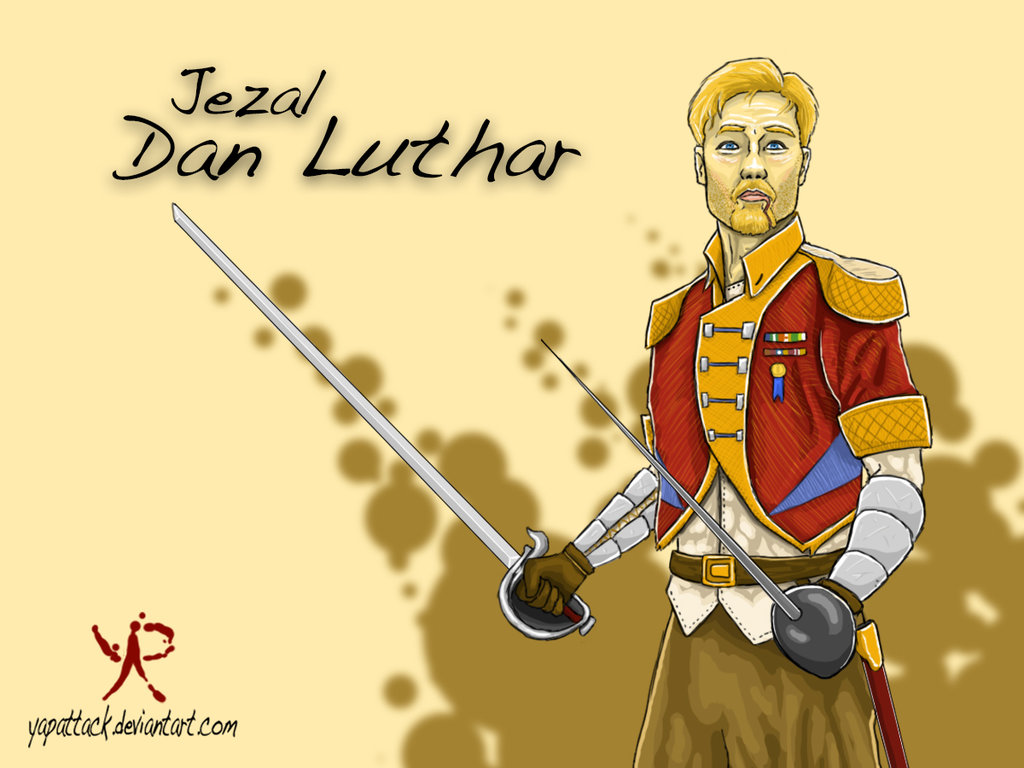
And then there is Jezal. A nobleman of the worst variety, a young man training for the Contest, a yearly fencing event that eager gentlemen throughout the Union engage in because winning brings fame and place within Union society. Hating Jezal is a given, even at the novels' end after (SPOILER: ) falling in love with a commoner, he still thinks the common soldier is beneath his notice. Still this classicism is so British that it adds a marvelous layer of reality to the novel. While kings and peasants are the bread and butter of fantasy, it is a rare novel that doesn't use some sort of diamond in the rough trope allowing the commoner to advance within society without facing the scorn of his betters. We like Jezal too, though it is unclear, aside from playing Mr. Darcy, what role he has in the action packed saga about to unfold.


Cliche: First there is The Barbarian. Logen is a man of the north. A common cliche in fantasy, most popularly used in Game of Thrones, as the peoples who live beyond the wall. Savage, scarred, filthy, wearing skins and uneducated. Think the Goths and the Visigoths and you won't be far off. Conan the Barbarian as envisioned by Howard is also probably the seminal work of Barbarian fiction.  Steven Erikson, as I've linked to before, has a neat essay on the concept of the Barbarian in fantasy.

Next there is the Old Wizard cliche: represented by the First of the Magi Bayaz. While Bayaz has no long grey beard or pointy hat, he does have the arrogance and the long lifespan of those who practice the art. Of course, Abercrombie puts his own twist to the cliche. Bayaz looks like a blacksmith and so far, no lightning bolts or fireballs. I won't spoil the magic for you, but it's there, and it's tastefully done. There is something off-putting about Bayaz.  Something vaguely distasteful, almost disingenuous about Bayaz.  Like he doesn't believe his own platitudes. 

Another new cliche for us is the First Law cliche. There is often something tongue and cheek about the First Law cliche, perhaps because speaking directly to the reader requires a deft touch, else it sound ham fisted and trite. It is a set of laws or principles which govern the system of magic, or other secretive or cliquish gathering.  Here the First law is that it is forbidden to touch the Other Side or speak with devils. The first law doesn't have much significance in this volume, though the second does, "it is forbidden to eat the flesh of humans." Other fine examples of the First Law cliche exist in the Wheel of Time, both in the repeated catechism against the Shadow, or in the rules for embracing the Source. It's a cliche, that done well, adds a sense of realism to the world, after all we do live in a world of laws and too often fantasy novels dispense with such mundanities.

The Middlemarche cliche. I've already mentioned it a bit, in my reference to Austen's Pride & Prejudice (the Pride and Prejudice Cliche just doesn't work as well)  the use of very classic forms of British class structure to inform the world. it's important to note that Abercrombie is British and as such has an implicit advantage over his Canadian and American contemporaries. In general I believe Erikson to be the leader of modern fantasy, but in this small aspect Erikson falls behind. Abercrombie's Jezal is so spot on detailing English snobbery it hurts.

The Evil Empire cliche and Migrating Other cliche: one thing I rather like about the First Law books and The Blade itself is that it has already painted two or three epic baddies who have nothing to do with the book's actual plot. This frees up the narrator to focus on the here and now while still allowing the book to expand into a series. I always hated the Wizard's First Law Books because the first two seemed like stand alone novels and the epic that emerged was appended to the first story with scotch tape. Not so here, we already have a variety of enemies and none of them are really central to any of the main characters. The Evil Empire cliche is often steeped in Orientalism, a West versus East, narrative. And while this is another racist element of fantasy as a genre, it remains, even today a pretty effective one: China and the Middle East remain bogeymen to most people and are great political fodder for applying motivational fear. In the Blade Itself we learn relatively little about the Empire. It is vast, it has a magical cadre of sorcerers known as Eaters, and it has a new, young emperor looking to earn his chops.

Then there is the King Beyond the Wall, a Mance Rayder type of baddy who is a Northman sweeping down to ravage the soft middle countries of the Union. This cliche is somewhat tired given the current popularity of Game of Thrones.
a Shanka, by rynomyte at Zbrushcentral

Last, there is a new cliche: the Migrating Other. History is a patina of competing movements of men, tribes coming north or south in droves and driving the current inhabitants further inland. The Migrating Other is the bad guy, even though he in turn flees another bad guy displacing him. In fantasy however, the Migrating Other can frequently be a race of non men, orcs or in this case the Flat Tops. Sanderson uses the Migrating Other cliche in the Way of Kings to describe the enemy with which the Kingdom is trapped in aimless and endless war.  The cliche by itself, though realistic enough, is generally not enough for fantasy. But, overpopulation, displacement, and finding food and resources simply does not provide the clear moral imperative that fantasy so often requires. So when used it's usually used in tandem with other cliches or as Abercrombie explains in the final pages (SPOILER) it is a race created by magic to serve as an army of destruction.

Completeness:Abercrombie has created a fully believable world with genuine, detailed characters. He also excels at the honourable mention: that writing technique in which a few lines of detailed text provides volumes of exposition. His listing of court lords and ladies is an excellent example of this. Though the Court has almost a non existent presence in the book, it still feels replete with characters that are differentiated, complete and ready to be picked up and exploited should the author need them. There's nothing more amateur hour then having a character added at the end to provide necessary information to end the story.  Also quite compelling its the idea of the Old Empire.  A great civilization destroyed by a war between magi, that has spent the following centuries in perpetual strife.
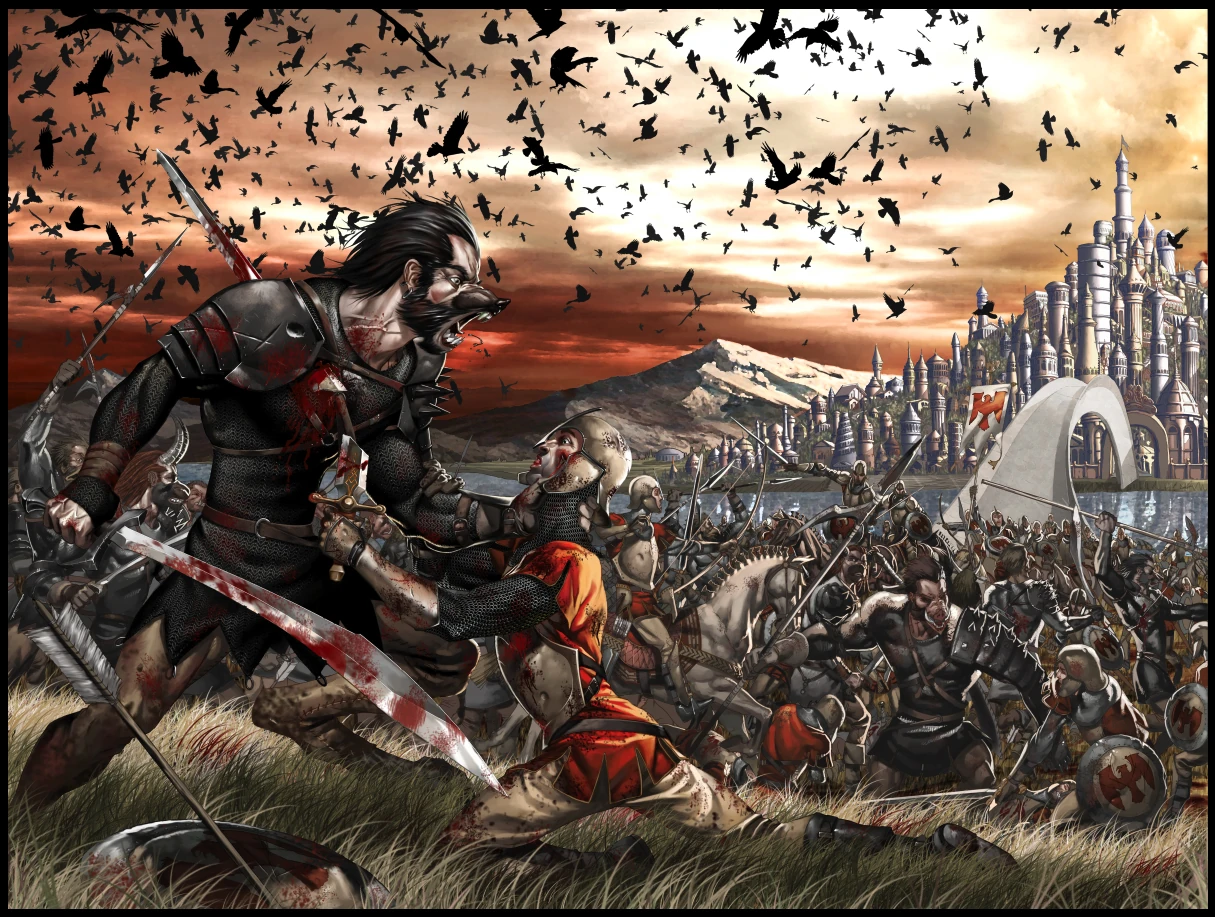
The fall of Manetheran, gorgeous, not sure whose image


The world feels completely fleshed out, easily a dozen nations are described or mentioned, though only three are relevant. Politics and trade seems real and even modern. As a fantasist with an interest in economics I was thrilled to see some discussion within the text of the economic relationships between provinces, the financing of the war with the Empire, a union bashing autocrat, and even discussion of crown and union debts.

Another delightful detail was in the small physical ticks the characters have: for example Logen Nine Fingers trims his blisters next to the fire, Marshal Burr has a weak stomach that causes him to burp unfortunately. These are the sort of details that really make a story sing.

But to top it all off. And I saw a reviewer (Mark Monday) on Goodreads mention this, the book is a truly funny read. It's dark humor, true enough, but the book is laugh out loud funny! Even my wife commented on my laughing while reading!

So, please give Abercrombie another chance, and my hats off to this new bright star in the realms of fantasy.

Saturday, January 31, 2015

Shadowdale by Richard Awlinson

So this may be the first book in the Forgotten Realms series that I have really enjoyed, and have found to be a fairly mature story. It also was written in 1989, and while it still follows a fairly staid Dungeons & Dragons, hero's quest, type of format, it's characters have a great deal more depth, then even R. A. Salvatore's entry into the realms
over the same time period, (Streams of Silver). The troubled heroes actually have back story! Best of all, the story ends in a large, well detailed battle scene with gods, demons, and thousands of troops.

One thing I found troubling, if only in a vague way, was that the premise of this series of books is that the Gods have been banished from the planes by the über god Ao. And as such, they are sent to dwell as humans in the Realms. Now, alongside the release of these books, were actual campaign materials detailing the stats of everything that existed in these worlds.  So, when gods are killed in the  course of this story, were these gods listed in the materials? Or were they Awlinson's creation for the purpose of this particular tale.  The Arrival, as it is called, would have to be a pretty big deal in the worlds history, particularly in light of the fact that magic seems to stop working, and clerics spells only work in the physical presence of their god. So, is Shadowdale adding to the canon of the Realms, or is it just a one off? From this link, it turns out that the Realms Creator, Greenwood actually did conceive of Bane.

When I start reading the books written in 1990, I hope to see reference to the Arrival and the events that followed.  I know that the events that occur in Darkwell, and Streams of Silver are quite independent of this apocryphal event. Though, they could well have occurred prior (or long after) the events herein.

The most enjoyable attribute of Shadowdale is story's heroes, Midnight, Kelemvor, Cyric and Adon. The story begins as these unlikely adventurers skip town on a guard duty contract, although why you would want your city guarded by men on forced contracts enforceable by prison sentences is beyond me. Why? To aid a mysterious girl, whose mysterious mistress is trapped in an old ruined castle.

Kelemvor is ostensibly the most developed of the heroes. A fighter with a terrible curse laid upon him. This curse forces him to only engage in human relations on a contractual basis whereby he is promised a reward, and then actually receives it.  If he does not, (spoiler alert) he turns into a hideous beast. This makes him seem hard hearted. Now, if Awlinson had opted for a shallow character, the curse not withstanding, once removed, would allow Kelemvor to be the selfless hero we all want him to be. However, it turns out, that he is, as all real people are, much more complicated then this. He stays to defend Shadowdale against the Zhentarim, but not because he cares one whit for the people of Shadowdale. He stays because he loves Midnight, and is promised her love, as the basis for the contract. Imagine knowing, as a lover, that your partner may love you, but they can only be with you while under the terms of a very strict contract.  I quite like this twist, and it is in stark contrast to Salvatore's Drizzt Do Urden, the dark elf with the heart as big as the Realms itself.  As a note, if you are, as I am, reading these chronicles for the first time, DO NOT google Kelemvor.  I just inadvertently spoiled the next two books for myself!  Don't click on this.

Cyric is another interesting guy. A thief, turned multi-class, fighter. That's a term from the old days. At first in the D&D world, you had to choose, fighter, thief, or magic user. In later editions, more classes emerged, and in the advanced rules, your fourth level thief could choose to become a fighter. He would retain his thieving skills up to that level, but he would then have to level up as a fighter instead. You could also choose to level up both, but it'd take forever, so most people usually simply switched.  As a boy, I thought this was cheating (having your cake and eating it too. Don't like the paltry hit point scores of a thief? Multi-class him and have the best of both worlds). Now, as an old man, I know that we wear many hats in this lifetime, and we frequently put earlier chapters in our lives completely to bed.

I digress. Cyric was born in Zhentil Keep. First in Spellfire, and now in Shadowdale, we are introduced to Zhentil Keep, as a city that worships the evil gods of the Realms. I find this to be a really interesting concept. Say what you like about cities, but for them to exist, a certain amount of cooperation is required. A certain amount of trust. After all, a contract is a promise, and not all goods can be paid for up front. For a promissory note to hold value, you must trust its issuer to fulfill the obligations therein. And trust cannot exist in a city of Evil. Unless, of course, it's not all Evil. Which reminded me of my favorite St. Augustine quote, "And even when men are plotting to disturb the peace, it is merely to fashion a new peace nearer to the “heart'’ desire; it is not because they dislike peace as such.  It is not that they love peace less, but they love their kind of peace more."

So I was eager to learn more about Zhentil Keep, from the character of Cyric. He was a thief and a murderer, but his most ardent desire is to be free of his past. To be free from the shackles of the Thieves Guild that made him what he was. He too could care less about the people of Shadowdale, and in fact despises them for their apparent weakneses of trust, love, faith and optimism. And he too, opts to stay and defend it from the approaching army. He's also an atheist, which is pretty hard to be in a Realm where there are actually gods. Like I said, for a fantasy novel of the late eighties, this is pretty deep stuff.

My favorite character, is Adon. Adon is a cleric of the goddess Sune, the Realms' Aphrodite. He is incredibly vain, in a harmless, humorous way, and finds himself being chased out of town by a woman who somehow managed to resist his charms. Adon loves the ladies, and he is a firm believer in beauty. Which makes his devotion to Sune all the easier to believe. After all, to believe in beauty one must only know desire and possess eyes. This would all make Adon pretty one dimensional, save for the fact that as a cleric in a time where the gods have descended, he has lost his powers, and has made no effort to find the avatar of the goddess living within the Realms. Neither for his belief, nor for the powers it gave him.  Which, is, odd.  And then, in the last sixty pages, something happens to Adon which is definitely not expected. And he becomes a completely different person overnight. Who he is, we do not yet know. His tale will likely be continued in Shadowdale's sequel, Tantras.

The last point I'd like to bring up is about that old sage, Elminster.  I've been hearing about Elminster for nearly two decades.  He's the Realms version of Gandalf, a long lived wizard of power to rival the gods.  Up till now we haven't learned much about him.  In Spellfire, we learned he had a dalliance with a student, who turned into an evil sorceress.  We also learned that he is short tempered, and humorous.  In my mind, I had always equated him with Dragonlance's Fizban, the bumbling old wizard who happens also to be the God Paladine.  But Elminster is definitely human.  This will probably make him a better character over all.  Though I must say, I rather miss old Fizban and his disastrous Fireball spells.

One last note. Shadowdale, Tantras, and Waterdeep were all released in the same year. Leading me to believe that they were written as one novel and broken up to sell more books, and to be more readable. It also suggests that Awlinson began these novels around the time that Niles, Greenwood, and Salvatore were composing their own founding works.

This was a good read, and if you're looking for some lite fantasy to get you through à lull, this would be a good choice.

Monday, April 9, 2012

Azure Bonds by Kate Novak and Jeff Grubb

Now this is really the beginning of the Forgotten Realms Novels.  You might remember my complaints about Darkwalker on Moonshae. It was a fairly shallow piece of princely do-goodery, that really said nothing about the Realms or their history.

Azure Bonds is everything I hoped for.  It has the beginnings of characters who were well known to me, long before I started reading the Realms, action, adventure, and humor.  If there was no romance, that's ok.  This time.  When I was a young kid, Dungeon & Dragons, attempted to compete with the already-past its prime moment of "Magic the Gathering" with a series of cards called "SpellFire".  Given that TSR, owned the rights to much of the famous Dungeons and Dragon's artwork, they had a ready supply of easily choppable art for these cards.  And they often kept characters more or less intact.  I had the Alias card, the lusty redhead above.  I always thought she was crazy sexy, and so I was curious about who this person was.  Well, now I know.

As a side note, I actually saw people playing Magic the Gathering a few weeks back, in a pizzeria on the Upper East Side.  The guy was actually showing off for a girl.  He had every single card in a thick, clear, possibly bullet proof, plastic container.  Which is crazy.  That's a "back away slowly" kind of dude.  I keep my Spellfire cards under lock and key.  If I showed them to my wife, she'd probably divorce me.
Let's get back to the Fantasy Five, something I've ignored in my ardor over the Malazan Book of the Fallen.

1) Character
2) Cliche
3) Scope
4) Magic
5) Theme

Character:
Azure Bonds is definitely a plot driven story.  But it has some interesting philosophical points, as any fantasy and science fiction novel must, that help define character.  I won't ruin it for anyone who wants to reread this classic, but the nature of the main character is a central dispute of the novel.  Regardless, the main character, a warrior woman named Alias, is an extremely likable character.  She's sarcasic and clever, but at the same time cares for her companions.  Her supporting adventurers are also extremely likable, and somewhat genre breaking, save for the Halfling Thief.  The wizard, though is a what Alias calls, "A Green Grocer" a merchant of magic, and not a true wizard with the long white hair, and the mysterious airs.  The halfling, though stereotypically a thief, is a fun and enjoyable character.  Mostly, characters are skin deep in Azure Bonds.  That said, we do learn some things about Alias, and her father, that provide some interesting character insights.  Unfortunately, I can't talk much about them without spoiling the book.  Of course, the best character, is Elminster, the very essence of quixotic wizard.  And though the character of Elminster is minor, and fairly cliched, you can't help but love the fiercely powerful, irascible old coot.

Cliche:
Azure Bonds takes place in the Dungeons & Dragons, rule-based system, and in the Forgotten Realms Universe, that comes with all of the Dungeons & Dragons cliches.  That said, Novak manages to make the magic and combat systems seem completely natural and not stilted or forced.  Which makes sense, I mean, the original 2nd Edition Rules were supposed to make combat realistic.  If it didn't involve so much THACO and Armor Class shenanigans, it wouldn't have been such a trying game.  Regardless, Forgotten Realms also made several cliche's of its own.  One of the mega villains, a fantastic creation called Moander, a dark God, who is literally a living wall of reanimated detritus, was used by the UbiSoft developers in the Heroes of Might and Magic series of video games.  Used in both Three and Four, here he is reimagined.  Of course, Kate Novak's Moander looks nothing like this undead piece of work, but the developers paid homage in many respects to both D&D, DragonLance, and Forgotten Realms. In terms of character cliche's there are relatively few.  The character of the halfling thief was fairly trite, but she's a non-essential character (though her actions are important). 

Scope:
The scope of Azure Bonds provides a narrowness of focus that gives ample detail about the Forgotten Realms, while not being needlessly compartmentalized as Darkwalker was.  The action starts in the town of Suzail in the nation of Cormyr.  One thing that the Realms reminds us is that the writ of law is only as strong as the nation that rules.  And the Realms are relatively small fiefdoms, with various small time Kings.  There isn't the sense of international politics that there is in Jordan's or Martin's epics.  There are some political upheavals, but so far, things are pretty local.  Sometimes I like that.  It takes an awful lot of memory and concentration to understand the politics of dozens of fictional nations.  I know that Tear sold grain to Illian and Cairhien despite a trade embargo on the one, and civil war on the other.  That's pretty messed up.  I know about as much or more about those three nations as I do Iran, Iraq and Syria.  One thing that bothered me though, was the interplanar warfare that occurs later in the book.  The concept of planes is very neat, and it is central to Ed Greenwoods original concept of what the Realms were--but in this case, it seems like too much of a convenience for a writer to engineer an exciting ending.  I like that the Realms are fairly grounded.  The magic has limits, and even though there is a much more diverse panoply of creatures to choose from, they are all bounded by the rules of a game, making them less.  Boundaries are important in fantasy, you have to adhere to the rules you set.

Magic:
I've covered this in some part.  Spells take time to cast, they use a variety of scrolls and components, they need to be memorized before each use, etc. etc.  The magic is covered by the Dungeons & Dragon's cliches, however, it still comes across as a novel, not the mechanical manifestation of spell casting in video games and in the old paper and pencil method.  But...there are times when the magic wielded does seem to completely bypass the rules altogether.  Given that Novak and Grubbs were writing when fantasy fiction was in its adolescence, this rookie mistake can be glossed over.  It's a genuinely entertaining story.

Theme:
That Azure Bonds qualifies as fantasy fiction is unmistakable.  The themes are all there, companions, loyalty, friendship.  Likewise, the evil triumvirate, greed, pursuit of immortality, and the pursuit of power, plagues the supervillains in this novel.  One theme however, permeates the Realms in a way that other mega epics fail.  The stories of the realms, Azure included, reinvigorate the notion of the quest.  In all the big serialized fantasy worlds, there are a small set of characters who pursue a goal for thousands of pages.  The goals change, but they're all in pursuit of a larger purpose.  The Realms, unlike the world of DragonLance, a war torn world with heroes and an evil goddess, were designed to be episodic, referential without commanding a single story line.  This is a concept that has been lost by modern fantasy.  And it's sad.  Because the quest doesn't always have to be epic, it can sometimes be as hard as a paralyzed man learning to wiggle his toes, or a pair of skinny kids freeing their sister from a den of Orcs.

Overall, I encourage readers to dust off this 1988 special.