So, I've been wanting to review a
Jordan book for some time. At the time of this review, I began my reread for the last novel, while also reading George R.R. Martin's
Dance with Dragons and
Brandon Sanderson's Way of Kings. So I got pretty far before I could begin taking notes. So, I decided to start my reviews where I remember the series beginning to really slacken. Note that as with my Erikson reviews, I am not going to follow the usual format of the fantasy five. The characters of this series and the world itself are too far along, too deeply established and writing a critique of that nature would be critiquing the entire series, something that i am not yet prepared to do. So be aware that if you havent read it, and hate spoilers, this review is probably not for you. Note, that this was written before my reread progressed past PoD, and certainly before reading Memories of Light.
The novel previous to this one was a
Crown of Swords. And while not as strong as
Eye of the World, the
Dragon Reborn, or
Fires of Heaven, it was still pretty entertaining, and the series moved along well, one more Forsaken killed, and another entire kingdom subjugated. But in Path of Daggers, we begin to lose the thread. And it starts with the name:
One of the objections I have to modern fantasy naming conventions is that the titles of books are becoming more and more mainstream, more generalized. In the 80s and 90s that made sense, no one wanted to be caught dead reading fantasy. George R. R. Martin is the worst for this:
Game of Thrones (a story about playing musical toilets),
Feast for Crows (anything dead),
Storm of Swords (History of the War of the Roses). Erikson is also bad for it, I mean Gardens of the Moon? (a light hearted romp about star crossed lovers) These names tell you nothing about the novels, and a title should, at least for a genre specific fantasy book. Robin Hobb's books are well named:
Ship of Magic, you knew exactly what that one was going to be about.
Assassins Apprentice, there again. I feel that Jordan sort of opened this Pandora's box. That said, the titles, while they could have been the titles of mass market fiction books (Eye of the World, three teenagers get trapped on a tropical island with a deadly secret. Or Fires of Heaven, a business executive learns that his company is selling a defective product and gets blackmailed when he tries to blow the whistle) they do actually relate, even though the connection can be subtle. Crown of Swords is the name the Laurel Crown of Illian takes after the siege is over (the crown is actually laurels interwoven with
daggers) so the title is relevant, even if you don't learn why untill the last chapter. Path of
Daggers, well, it didn't become clear to me until now what the relevance was, which after eight reads, shows the connection was indeed subtle.
Path of
Daggers, here the spoilers start, is about the return of the Seanchean. And the connection, is a reference in an earlier novel to a Seanchean saying, "on the heights, the paths are paved with
daggers". That's it, that's the relevance. There are no special
daggers, or special paths, just a saying that appears once in the series, and could be attributable to anyone, much less the Seanchean. This was not a good title, and few indeed must have been the readers who caught it. I'd also like to note that, the action with the Seanchean doesn't even begin until around page 500. That's a long time to wait for a title reveal. However, I have to say that all the Seanchean chapters are excellent, in all the books. My wife would say that the Seanchean people are probably a play on an unfortunate Orientalism, as many of the traits of the Seanchean (not physically, Jordan makes that clear, but their armour, ritual head shaving, systems of honour, etc.,) bear a small resemblance to various Asian cultures. Orientalism is the viewpoint, the western visitor looking in on a baffling and strange culture. They remind one a bit of Raymond Feist's
Empire Trilogy, or Magician: Master, where Pug, a young western lad is enslaved in fruit groves on another planet whose denizens have an Asian bent. Still, it's the outsider looking in perspective that makes it so enjoyable, so I don't feel the slightest bit of guilt for really enjoying the culture of Seanchean.
It is through these sequences that we see the next great battle, which is Rand skirmishing with the foreign invaders in the mountains north of Illian. Have I said Jordan writes a good battle? Because he does. I think the key of drawing a great battle on a page is the acknowledgment that you can't describe the whole thing. Battalions and divisions get separated, friends in the same troop might end up miles apart by the end. So there are gaps, but enough perspectives exist to do it justice. Even the chapter title acknowledges this fact, "fog of war"
Moving on, the prologues to the Wheel of Time are usually pretty good. You get a glimpse of what the enemy is doing, what new things are afoot, what could possibly be the main action for the novel. That's what a prologue is for right? So why on earth were the border lords introduced? At least ten pages were devoted to describing in detail the look and feel of the lords of Shienar, Arafel, Kandor, and Saldea. And for what? They are never mentioned again in this book. Poor choice. And, frankly, when they are mentioned again... In a series that has lost many adherents for being far too long, why was this subplot even necessary. I agree that all the lords of the continent must acknowledge the Dragon Reborn, and that most of the battle against the shadow should happen on their lands, but why this useless way? We have no answer in Path of
Daggers.
One good thing about the prologue, is that the Brown Aes Sedai, Verin Mathwin, who we've been wondering about for thousands of pages, finally begins to show some of what makes her freaky. We find her weaving Compulsion, a forbidden branch of the art of the One Power. So a mark against her, but we don't yet know why, and as it becomes clear, it's use appears to help Rand. The reveal, which doesn't occur until Sanderson takes over, is worth it, even if it took 13 books to reach.
Around this time, and for the first time really in Crown of Swords, we learn that the Dark One can actually bring people back to life. This is a dangerous line to cross in fantasy, though some authors cross it with impunity. Immortality is one thing, being hard to kill, is one thing. Dying and brought back, that can lead to story integrity problems. Chief among them, is the lack of consequences. If characters who die can willy nilly be brought back to life, the drama in a piece of writing begins to unravel. When Whiskeyjack and Hedge die in the Malazan Book of the Fallen, you weep for them, and for the loss their friends must face. But both come back, and, while Erikson's epic is masterful, I'm not sure this was a great ploy. Our grief over Whiskeyjack's death becomes expectation and anticipation for his rebirth. While this itself is dramatic, it may not have been the strongest choice. In one of the most recent books published, Anomander Rake, the wielder of Dragnipur, is killed. It's heart wrenching, but at the same time, I don't really know that he's actually dead. And until the series is over, I won't know. This can be a useful ploy, hell look at Christ. Or his fictional cousin, Gandalf. But at least in Tolkien's epic, no body was ever found, it's just assumed that any dude who falls down a never ending chasm with a Balrog is going to die.
But Jordan has supplied the background for this possibility to work, in the very first book no less, and because of that I think it works. Also, as book Fourteen was finally just published, it allows for more villains to be created without having to, at page twenty-thousand, suddenly introduce a villain who is even a badder bad ass than the twelve other bad asses we already saw die.
 |
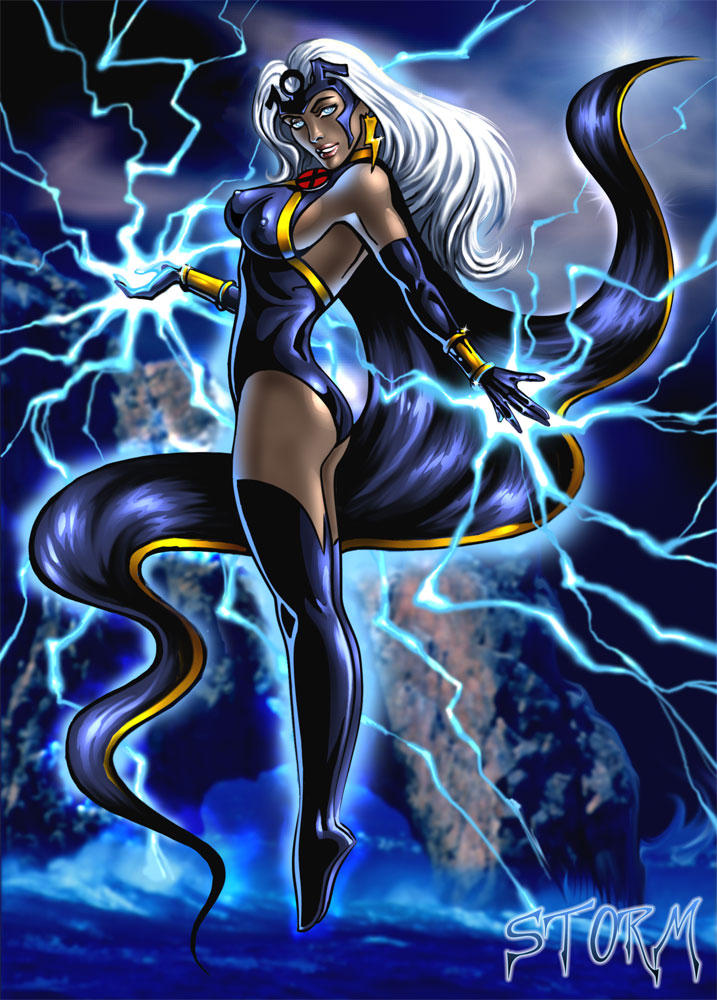
| The Forsaken, uncredited, but I think Saliba |
In this case, the ground work is the premise of the series: the Dark One, imprisoned by the creator for all of time, because he wants to regain his freedom and break the wheel of time thus unhinging all of reality. way back in book one, Ba'alzammon, the original bad ass, told us that this battle against the Dark one had occurred countless times, and that the Dark One was The Lord of Death, and that he could bring Lews Therins wife Ilyena back to life if he swore forswore the light. Well, he wasn't lying.
And at least two of the forsaken were returned to life. They have new bodies, I guess the dark one can't regenerate human flesh, but he can siphon a human soul into a human vessel. We don't know who they are, but we know they can't have been killed by balefire, that includes Ravin, Sammael, and Belal. But who are they? One we know was a man, returned to life as a woman. Interesting choice that, interesting for fantasy. They are, Orangar and Arangar. The other, is clearly insane, reborn also as a male, but with a whole face. My guess is that these two were the original forsaken that Rand killed in book one, Aginor and Balthamel. Don't google search that info as I just did, they make no bones about spoiling identities there. Particularly because Aginor was known to be insane. It was as he who created the Shadowspawn, trollocs, myddraal, etc. His revival leads to the possibility that he could create new and better Shadowspawn.
Then there is Moridin and Cyndane. Or, to use the old tongue meanings of those names, Death and Last Chance. Morridin takes a larger role in Path of D
aggers, and is shown to be in charge of Moghedien, Cyndane and Graendal. I believe he must be Ishmael reincarnated. The real mystery to me is Cyndane, my first thought is that she must be Lanfear. She is reincarnated as a beautiful woman, but Lanfear wasn't just beautiful, she was breathtaking, astounding, so naturally she's pissed she didn't get her old body back. That said, Lanfear's obsession was Lews Therin, and we see little of that obsession in Path of Daggers.
 |
| By Seamus Gallagher, is Cyndane Lanfear reborn? |
Ok, one of the things that makes this series suck until Jordan died is anything to do with Elayne Trakand, the Daughter Heir of Andor. This is compounded with frustrating and annoying sequences with the Sea Folk, and the Kinswomen. I just don't care. I don't know why Jordan spent so much time on the Sea Folk. The entire story takes place on one gigantic landmass, one continent, the sea folk are periphery at best. And once Traveling is invented, they are made completely redundant. They have fast ships and they have foug the Seanchean. Once Semirhage singlehandedly destroys the nation of Seanchean, in later books, the Aryth Ocean is entirely unnecessary. They're utterly annoying, and a complete waste of time. And in the thousand pages left in the series that I have not read, there is no way short of the entire nation of Sea Folk getting sealed up with the Dark One that can justify the sheer number of pages spent on detailing them. I have a feeling that Jordan wanted to balance out the Aiel, Jordan is big on balance, one of his principle cliches: Maintaining the Balance. Aiel dwell in the desert, and they have a prophecy that involves the Dragon Reborn. Therefore, there just be a race of sea dwellers with a similarly structured prophecy. But, it's too late in the series, and, as I said, the battleground for this conflict is landlocked. They are utterly irrelevant.
Ok, I lied, they can do one important thing. They know how to manipulate the weather with the One Power. And in the early pages of the Path of
Daggers, they use the Bowl of Winds and alleviate the Dark One's touch on the weather. That was a good bit, but he could have tied up a story end right there and sent the Sea Folk on their merry way. One thing I thought regarding the Bowl of Winds: visually the scene was spectacular, and I very much enjoyed how each group of One Power users over the entire continent had a different theory on what had taken place. But. Jordan didn't really explain the how of it. This is one thing that I feel Sanderson could have explained better if he'd written this portion. Sanderson is great with describing the how and why of magic. I suppose that it could have been done very poorly, but weather magic could be cool. After all, temperature and pressure are almost magic already, and requires a large understanding of science to understand. At any rate, it was adequately done, so I can't complain.
 |
| Elayne, Aviendha, and Nynaeve using the Bowl of the Winds |
I never wished for this series to be smaller, but here at the end I wished that more time would have been allowed for the actual Last Battle. For Tarmon Gaiden. So much great material is hinted at about the War of Power. Entire cities destroyed with balefire, the madness of the male Aes Sedai, one who executed a singing ring of Aiel a thousand people strong, while the rest of the citizenry evacuated. The betrayal at the Gates of Hevan, how Aginor tested the Myddraal ability to sink into shadows to the destruction of over twenty of the horrid creatures. Jo cars, shocklances, the opening of the Bore into the dark ones prison and the destruction of the Collam Disaan. Thats what I want to see more of, who are the new dread lords? What city will fall first? Not this tiresome succession in Andor, and these idiotic windfinders who have their panties permanently knotted. By the way, if you haven't gotten your Age of Legends fix, read
Bob Leeman's fanfic here, it describes some excellent, and well researched Age of Legends stories.
And if this load of wind finders weren't enough there are the Kinswomen, this secret organization of women that take in White tower runaways and wilders. Much is made over their age, that Aes Sedai used to live longer, and that these Kinswomen somehow do live longer, several hundred years longer. Well, so what? A lot is made of it, and I'm not sure why. Possibly it has to do with Egwene's desire to do away with the Oath Rod, which she believes, shortens the lives of those who wear it. Is this getting us anywhere nearer to Tarmon Gaiden though? Is it?
 |
| Egwene holding Vora's Sa'Angreal |
The second reason Jordan has the Kinswomen around is for their numbers, apparently they number well over a thousand of them, all unaffiliated with the tower. The White Tower, has "known" of the groups existence, but assumes the group is at best forty to fifty women deep. Of course, at the rate of say ten washouts a year, including runaways, simple addition would place their numbers at large enough to take on the tower after 400 years. No matter, what matters is that Egwenes wants to mobilize them. Now, if the point of the book series were the history of the White Tower, maybe this would be useful or important, nut as it stands, given how contentious the lot of them are, and how snooty actual Aes Sedai are, the task of bringing them in seems monumental, and worthy of a series of its own. If. If Jordan didn't do such a shitty job of writing women.
It took me a long time to come to that realization. And not all the women characters are poorly drawn, but they do adhere to some egregious stereotypes, and comparing his women characters to Martin's provides some great examples. However, I am going to save that comparison for another post. Suffice it to say Kinswomen, are another terrible waste of space.
Just skip the chapter "A Pleasant Ride." You'll miss absolutely nothing of importance.
On the subject of character change and growth, a comparison between Rand and Perrin is warranted. Rand, who is the story's seminal hero, has been the only one to experience dynamic character change. On the other hand, stolid Perrin, slow to anger, deliberate, thoughtful, and duty-bound provides a much subtler character change. Subtle, because at first I really didn't think he experienced any change. Initially, his struggle, to choose between the axe and the hammer (obvious foils for war and peace,) is still ongoing eight books after it was introduced. That said, when your story is twenty thousand pages long, I suppose you have to play the long game for character development. The problem though is that Perrin will never choose the axe, or at least he will only choose it to uphold duty, not because he is a brutal killer. We've known that since book one.
 |
| Perrin, by Seamus Gallagher |
So is the struggle really a struggle? I'd say that this hasn't been the operative character change in several books. What's going on now, is indeed much more subtle. Perrin is adjusting to married life, and coming to embrace his latent powers as part-wolf. The former is an interesting, though frequently sexist thread; the rather hackneyed combat between the sexes that Jordan frequently indulges in.
In this case, stolid, loyal Perrin, has a flamboyant and extremely jealous wife in Faile, such that the magnificent Berelain, probably one of Jordan's unintensionally most brilliant female characters, causes undue strife in Perrin's marriage. Not because the beautiful Berelain is a temptation for him, quite the opposite, but because Faile refuses to believe that he is not, was not, and could never be tempted. So the character change is actually somewhat brilliant in that Perrin learns to have an adult relationship with a woman. I myself took years to learn the ettiquette of relationships, and in particular, living with a woman. That said, while these musings are the benefit of hindsight, this Berelain/Faile thing, amusing in book four, drags by book 8. Particularly when, after Rands abduction, all I want to hear about is the main action, and instead we are dragged through a long sequence of Perrin's attempts to flee Berelain. What makes it all the more useless is that Min predicted in book 3 or book 4, that she was going to fall for a perfect man in White. Obviously, Galad.
One nice thing in PoD, is that one storyline is, if not tied up, the finally tethered to the man plot. the exiled Queen of Andor, who has been held captive in Amador, is finally sucked into Perrins ta'veren whirlpool. The scenes are neat, well done, and exciting. However, one wonders why Jordan just didn't tie up that thread. If Morgase had just told Perrin that she was the Queen, we could have avoided the awful slog in Winters Heart and Crossroads of Twilight. I get that he must be leading to a very specific reveal, but for a very minor character, it seems like a poor choice to drag this out. I don't much like the ending of this book, and part of that is Faile and Morgase abduction by the Shaido, but that reveal wouldn't have changed the next book all that much. It would just make grtting those two women back, that much more important.
 |
| Queen Morgase, another by Seamus |
While we're on the topic of Morgase, for someone lauded as a good, fair, and wise ruler, her character is just as headstrong and idiotic as her daughter, and just as irritating. I liked her coming out from under Ravin's Compulsion (Compulsion being a forbidden use of the One Power, because of its obvious, slave inducing potential). I liked her discovering Sebban Balwer in Amador after Nialls assassination, her emotional state after Valda rapes her, but everything else was, well, dumb.
While we're on the topic of Andor, can I just say that the Trakands (mother and daughter) insistence that Rand cannot 'give' Elayne the throne is incredibly frustrating? Ladies, I'm sorry, but the Dragon Reborn effectively conquered your nation in a relatively bloodless coup. That he was willing to cede its rulership to the rightful heir is a gift. Moreover, as we discover to our woe, Elayne's claim to the throne is far from secure because of how her mom pissed off everyone, so, it really isn't her "right" after all. But the amount of ink spilled on Elayne all in a dither about Rand's proclamation is really just too much.
Of course, the problem with a series of novels with thousands of characters and that took 23 years to complete is that there is an open editorial question on how to write it. In every book series that I've ever read, the author, and likely his editors, always reintroduce certain facts and characters. So that the reader, who just bought book six after starting the series seven years before (or more!), doesn't have to reread the previous five books to understand what's going on. I suspect that there are two arguments for this, 1) for the readers benefit and 2) for the publishers benefit. I've put off buying Memory of Light for almost half a year because I'm waiting to finish my re read. The novel will be in paperback by they time I get there. But for us rereaders, the constant character reintroduction and reaffirmation is an utter waste of time. The European version of these novels, at least the French version, has a plot synopsis at the start of every novel for just this reason. But, for all of that, this could just be Jordan's plodding writing style. Certainly, the reintroductions should be done by page 100, and these repetitions, are still occurring well into page 300 to 600.
Other nits and observations: the Aiel clan, the Shaido, first of all, the name? Um, what shall I call the evil clan? Can they wear evil looking hats? Secondly, why do their numbers seem three or four times the amount of all the other clans combined. If that were the case, and it isn't really clear that it is, then you'd think Rand would have made more of an effort to bring them to his camp. Instead, book after book, a wandering army of lethal Aiel, between 60,000 to 200,000 large continues to be a major annoyance to the Dragons forces.
 |
| From the New Spring Comic, the Aiel Horde |
I mentioned Egwene earlier, Jordan's chapters with her and the rebel Aes Sedai are quite exciting. I don't like Egwene. Something about twenty year old girl's running large organzations with almost zero training and life experience sort of irks me. Even so, these chapters have enough going for them plotwise that I can overlook that. I guess that's the problem with a book series that takes a decade to complete, I probably wouldn't have minded that fact when I started reading it. One nice thing about Jim Butcher's series, Codex Alera, is that two years elapse between each novel and the main character, a 15 year old boy, is a man by the time the series ends. I'm guessing Butcher was probably irked by Jordan's progression as well.
Still, Jordan has a nod toward experience. By making Siuan Sanche, Egwenes advisor, we get a really excellent passage about the three oaths. Egwene is a headstrong girl, and she tells Siuan that she thinks the three oaths are bunk, and now that she is in charge she intends to revoke them. They are 1) that they cannot lie, 2) that they shall make no weapons, 3) that thy shall harm no one save shadow spawn, unless it is in defence of her life. Of course, Egwenes really just wants the ability to lie, to use as a tactic. Anyway, I will reproduce the Siuans response below.
"The oaths are what make us more than simply a group of women meddling in the affairs of the world. Or seven groups. Or fifty. The Oaths hold us together, a stated set of beliefs that bind us all, a single thread running through every sister, living or dead, back to the very first to lay her hands on the Oath Rod. They are what make us Aes Sedai, not saidar. Any wilder can channel. Men may look at what we say from six sides, but when a sister says, "This is so," they know its true, and they trust. Because of the Oaths. Because of the Oaths, no queen fears that sisters will lay waste to her cities. The worst villain knows he's safe in his life with a sister unless he tries to harm her. Oh, the Whitecloaks call them lies, and some people have strange ideas about what the Oaths entail, but there are very few places an Aes Sedai cannot go, and be listened to, because of the Oaths. The Three Oaths are what it is to be Aes Sedai, the heart of being Aes Sedai. Throw that on the rubbish heap, and we'll be sand washing away on the tide. Give up [the Oaths]? I will be gaining."
 |
| Siuane Sanche, Seamus Gallagher |
I felt this was really inspired, and made me wonder about Jordan himself. He was a militrary man, and of the older class, a military school grad and southern gentleman. So, I feel you can really hear the author's voice in that statement. Personally, I felt it was an excellent vindication of the role of the Aes Sedai from page 1 of the entire series. From the start, Aes Sedai were not to be trusted, they could not lie, but speaking broadly and with many layrs of meaning, they could effectively manipulate. This is one horse that Jordan kicked to smithereens. But, Siuan recalls the ancient honour of the profession of Aes Sedai, which meant in the Old Tongue, Servant of All, and restored it to some dignity. The scene also allows Egwene's character to finally grow up, at least a bit.
The chapter "The Law," is not to be missed, it's the conclusion of the Aes Sedai story for this book, and it's a doozie. The title is a reference to an obscure branch of Aes Sedai statute, called the Law of War, which effectively makes the Amyrlin Seat a unilateral power. And Egwene, uses it to establish her power amongst the Aes Sedai rebels. This brings up another issue, something troubling. By and large, I think the Wheel of Time is a liberal series. It's central ideas are humane ones: kindness, respect, justice, tolerance. And yet Jordan feels perfectly comfortable making Egwene a dictator by declaring war. I don't know Jordan's politics, but he was a southerner and a soldier and that could make him a conservative. However, it is a common belief among those with military training, that a war must be prosecuted by a single man, and his counsels of course, and that war governed by Democratic bodies are doomed to failure. There might be some sense to this, but it made me feel a bit uncomfortable, and I thought it worth noting.
Lan al' Mandragoran makes his first appearance after disappearing after book six, the
Fires of Heaven, when his Aes Sedai, Moraine, perishes battling Lanfear. Lan was always a hard character, and served as a an excellent martial foil, to the three inexperienced boys who left Emond's Field. And when Rand and the others earned his grudging respect, and received his gruff "
tai shar Manatheran" we crowed with delight. And when we learned about the broken crown and the seven towers, and the dead nation of Malkier, we understood his stony face and loved him for it. And even though he ends up falling for another of Jordan's ridiculous female characters, Nynaeve, we were glad for him. However, if I hear once more about the darkness in Lan's eyes, the smile that never touches his eyes, etc. etc., I will literally throw the book across the room. It's not that it is so tiresome, it's just that its untrue. The man is constantly smiling! He's laughing at Rand's jokes, Nynaeve's foibles, Morraine getting humbled, Mat Cauthon's attempts to flee. The man smiles and laughs almost more than any other character. Sigh.
 |
| I'm laughing on the inside, Seamus Gallagher |
Which brings to mind an interesting point about Jordanian humor. All books must have a humorous twist, something to lighten the mood, even if its very rarely. Erikson uses his bizarre marines with their gallows humor, also his pixie like characters, Kruppe and Pust. Weiss and Hickman had the kender character as well as the fumbling wizard/god Fizban. Jordan frequently uses Mat Cauthon, womanizing, and fleeing from responsibility, dicing and drinking to add humor. He also uses the antics of his female characters for his highly sexist type of humor. And occasionally, Rand himself will crack a smile after being humbled by a woman. With all that though, it must be said, that Jordan is not a funny author: moments of levity are barely humorous at all. It's not a bad thing, the apocalypse deserves serious treatment, but it is regretful.
As we get in in the book, it becomes less and less apparent, where we're going. And the reason for that, is that the story's main hero is completely opaque, and has been since book three,
The Dragon Reborn. We never know Rand's plans, not until we find out, usually on page 600, what his various comings and goings, his cryptic messages to his Asha'man, all meant. On the one hand, this is a useful story telling technique, as it allows Jordan the freedom to still surprise the reader 14,000 pages in. On the other hand, Rand is our favorite character, the story's most pivotal character. By removing him from the center, Jordan makes it just a little harder for the reader to bear with all the boring tropes and repetitions that so characterize his style.
One of those boring repetitions is an insistence to detail the nobles from each of the countries Rand conquers. At first I was highly resentful of having to read about page wasters like Lord Weiramon, Aracome, Semaradrid, Colavaere, etc.
ad nauseum. But, after a great deal of thought, I don't think the series could have been written without them. This is essentially a story about world war, if Jordan had ignored the existence of the landed gentry the story would have come off as false and shallow. As it is, he makes the vast majority of them into utter fools, like Weiramon, whose idea of strategy is "the charge". There are the really small characters like Lady Estanda, and Lord Tedosian, all completely inconsequential, who scheme against Rand, and mutter idiocies under their breath about being ruled by a commoner. But, if he doesn't explain the infrastructure of the nation of Tear, or Cairhien, or Illian, at least the inclusion of these idiots is a gesture at describing how day-to-day life is administered. Then there are the few nobles who are really great characters who get short shrift page wise. The loyal Lord Dobraine Taborwin, the rebel Lord Darlin Sisnera and his paramour, the Lady Caroline Damodred. I'd really like to see more with all of these characters, and in fact, I've written
a fanfic about Lord Dobraine (if you want a sample of my own writing skilz). And, gasp, it sounds a lot like Weiramon is a dark friend! So on the whole, I'm glad Jordan spends so much time detailing the nobility. I'm also glad that on the whole, they are foolish, ignorant, and greedy. They were, and continue to be that way in real life.
At long last we get to the ending. In my notes for this post, I dubbed it "surprising and weird." If my hypothesis about the main thrust of the novel being about the Seanchean were true, well, that was tied up about 100 pages from the end of the book. Instead, we have several Asha'man turn traitor, Torval, Rochaid, Dashiva and others. We have suspected Taim's under lieutenants for some time, but after the assassination attempt fails, Taim appears, confusing the issue and promising to find the traitors. I understand that Jordan wants to keep the divisive and interesting character of Taim, who, even before we learn he's either a dark friend or a forsaken, was always going to turn on Rand. But again, we are so close to the series finale, why not just allow this to be the end of Taims cloak and
dagger routine? In addition, the hint is dropped that Taim, is not actually Demandred, something we have been wondering. And if that is true, then where is Demandred hiding? Let me make a shoutout to one of my fanfic writing friends, who has a crush on
Mazrim Taim and has written not one, but
two amazing stories about him.
But back to surprising and weird. While its true that something like this really should happen, none of the characters have really been developed. Torval sneers a lot. Rochaid is an asshole. That is about all we know. And to have this be the exciting conclusion, it was a disappointing ending to what was otherwise, a pretty good installment.
A sad note further confuses what is already a very confusing ending. At the exact time that some of the Asha'man turncoat, another, a young man named Fedwin Morr, also an Asha'man, but a good one, goes insane. Being Ta'veren bends chance around Rand al'Thor, but having Morr lose his grip on sanity at the exact time that the others attempt to assassinate Rand, was a poor choice. It just made for a confusing, nonsensical ending. Despite that, the death of Fedwin Morr is very sad. Morr who is always connected to being very young, regresses to the mind of a four year old, and attempts to secure Min, by building a wall around her. By taking the building apart. Rand slips something in his drink and the young man dies in his sleep.
In almost 15,000 pages, that is the very first death of a good guy, and his character is a bare footnote in the series. Something is wrong with that.
What makes Path of D
aggers so frustrating is that the end is a total cliff hanger, and worse, one that does not seem to further the plot. Up till now, most of these novels have had real endings, and though we are left with much to ponder, the ending satisfied some itch, usually with the removal of one of the bad guys. But not here.
Let's tie things up. Much occurs in Path of
Daggers, and some of it begins to tie up some plot lines. For instance, Morgase is tied to Perrin, and then to Sevanna and the last of the Shaido. The Prophet, who has been wandering Ghealdan causing trouble, is connected to Perrin as well. The return and clash with the Seanchean. All good. And yet, so much new, half a dozen new Aes Sedai introduced in the Tower, plots to uncover the Black Ajah. The army of borderlanders in Andor, this subplot with the traitor Asha'man. At this stage in the game, the addition of new plot twists should only be introduced as a method to start tying together old plot twists.
So, all in all, I really did like Path of Daggers, up until the last 100 pages. They don't ruin it for me, but it's why, in my memory's eye, I recall the series starting to sag around here. Still, I want to make it crystal clear: Robert Jordan's work is seminal fantasy reading. If you dig the genre, the entire cycle is required reading, even the lesser volumes.


 I've wanted to review some classic fantasy for this site, and I got my chance to reread this book when Tor.com dropped a free epub of the second book in the Recluce Saga. I remember reading it as a teenager and loving it, but many many things change between one's idealistic childhood and one's adulthood. And in this case, my enjoyment of the Towers of Sunset easily doubled in the intervening years. For two reasons: I like depictions of realistic relationships, and while medieval and medieval styled relationships were no doubt different in many ways, the subtleties of understanding between the sexes are always well developed in the realm of Recluce. The second reason, of course, is my devotion to economics and the study and display of economics in fantasy literature. That said, I can see this as a possible turn off to many readers. In my attempts to sell my own work, I've found some who think economics are boring! And I'm not even talking microeconomics, replete with equations and variables and charts, they find the macro stuff boring!