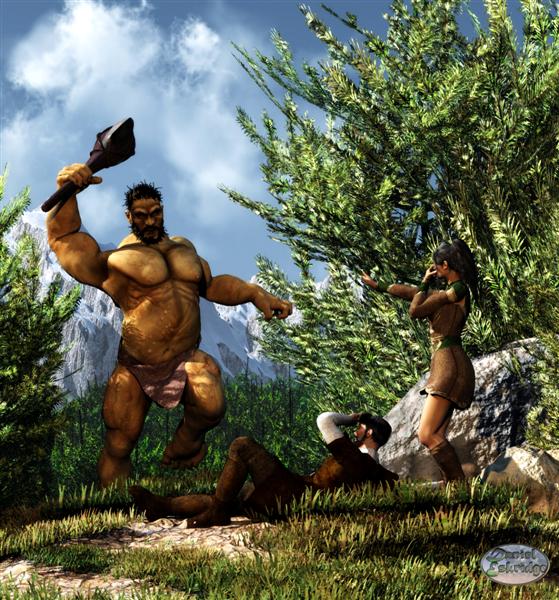
This marks the final installment in the Moonshae Trilogy. And, as I am going to start writing shorter blog posts, let me simply outline a few points about the series, about the Realms, and about this particular novel.
The Moonshae Trilogy are some of the first books published in the universe of the Forgotten Realms, published in 1987 to 1989. And this was a period of great schlock in the fantasy genre. And these books fit the bill. They are pure swords and sorcery. Dungeons and Dragons at its most obvious level. In some ways, though the books were intended to help sell the games, and vice versa, the books are fairly limited by the universe of the D&D world. Anyone who has ever read the Players Handbook has had their eyes glaze over with the sheer number of rules, dice roles, and mathematical calculations required for even the simplest of actions.
So when a level six druid casts the level three spell Plant Growth, what happens can be described anyway the dungeon master wants, but at the same time has to adhere to a very specific set of limitations. And in many ways these stories of the Forgotten Realms are just that, well DM'd stories by a group of players fulfilling quest objectives.
Or the DM can break the rules entirely, as they sometimes do. But breaking the rules is dangerous business and it can backfire on the author. One nice thing about writing in a new, or less proscribed fantasy realm is that the limit is your own imagination, and the rules are yours. Breaking your own rules creates problems too, but a re-envisioning of said rules, an enlarging of the paradigm, is a simple escape from these sorts of problems.
And in each of the Realms books I've read (and I've only read up to 1989) you can literally see spells being cast out of the Magic User's guide. When the dark god Bhaal creates his evil champions to battle the heroes, they came straight of the Monster's Compendium. And they have to, because the main rule of writing in an open series like this is a certain consistency. Still, I'm not sure how I feel about a Displacer Beast being a big bad. On the one hand, it recalls my egregiously misspent youth (playing with dice and pencils when I should have been out drinking and having sex) on the other hand, the sense of horror and intrigue created by the unveiling of a "new monster" is almost entirely mitigated.
Up until now, just three years into the history of the Forgotten Realms, the books have no inter connectivity, save for a few common city names. The tales have begun at the far ends of the Realms and have involved relatively little geography. Though R.A. Salvatore's Icewind Dale series has some decent travel. Ed Greenwood's own first novel, the man behind the Realms, taking place in his own world was simply atrocious. Spellfire has to be one of the worst books I've ever read.
This was never the case in DragonLance, which had such a serious and continuous narrative of the War of the Lance to underscore the personal dramas within. That said, the Realm of DragonLance was much less flexible, and probably why the Forgotten Realms have, I think, ultimately triumphed in the worlds of TSR. Anyway, my next book in this series is Shadowdale. A town first discussed in Spellfire. I am looking forward, finally, to some crossover.
Last point, about Darkwell. This book was a pleasant surprise. The characters took some dark turns, and some of the most intrinsic characters actually died. That said, the book would have been vastly improved if Niles had NOT decided to make it a happy ending. Meaning boy gets girl, boy gets forgiven, atonement occurs, and they have many happy children together. If Niles had not pulled his punches at the last minute, his characters could well have lived on to a fourth or fifth book. The druid heroine, Robyn, having turned Cleric after the death of her god, the Earthmother, would not have forgiven the King's infidelities. And Tristan would have actually grown for it. If Tristan had been wracked by actual guilt over the death of his friend, then he would never have forgiven himself, and the sadness this engendered in him would have made him a far better King.
That said, until the last six pages this novel was difficult to put down. And that makes it the best Realms novel in the series so far.
For a nice history of D&;D, look here.
Search This Blog
Showing posts with label Thief Cliche. Show all posts
Monday, January 19, 2015
Thursday, October 6, 2011
Darkwalker on Moonshae, Forgotten Realms 1, Douglas Niles
I intend my review of this book to be short and sweet. This book was terrible. As an intro to the Realms, it brought, literally nothing to the depth of the world created by Ed Greenwood. After reading R.A. Salvatore's Homeland, I was deeply disappointed. As I stated last post, I am going to attempt to read these books by date of publishing, having faith that Wizards of the Coast had some idea that the world they would be creating would be somewhat cohesive, and not like The Simpsons, where every character restarts every episode with little or no history. Granted, this was the late eighties (published 1987), and it was a different time for fantasy genre fiction. The genre, whose following grew by leaps and bounds because of works like these, has grown infinitely more sophisticated. However, Douglas Niles' first stab at a Forgotten Realms novel reads like the senior project of a highschool student.
I was rather hoping that the first series in the Realms would be of the same caliber as Margaret Weis and Tracy Hickman's War of the Lance, saga. So far, I am deeply disappointed.
Character: There are no characters in this book. The lead character is a feckless prince named Tristan. He's apparently irresponsible, but we don't see any evidence for that, apparently he whores and drinks every night, but we only see that one night at a summer festival. And apparently, he's got a heart made of gold, and is really in love with a ward of the King, a young girl named Robyn. Who flirts with a thief, for no apparent reason, which never goes anywhere, and is completely unresolved by storie's end. SPOILER: It turns out she's in love with the prince too, and the thief flirt was a red herring. Big surprise. Still though, it's not all bad. I'm reminded that a big part of high fantasy was romantic love. A lot of modern fantasy writers, in their cynicism choose to ignore this. But Arwen and Aragorn's forbidden love was a highlight of Tolkien's saga, not a distraction, or a subplot. Readers of fantasy are romantics, and love, no matter how unrealistic, always appeals to us. Back to the facts: Tristan is the most developed character, and he's as shallow as condensation.
Cliche: The interesting thing about reading a book that takes place in a world that is determined entirely by the rules of the 2nd edition of the Dungeon and Dragons handbook, is that the author can choose when he breaks with the rules, and when he upholds them. As an old dungeon master, I find both possibilities interesting. When one of the minor characters, the aforementioned flirty thief, Daryth garrots a Firbolg in one stroke, you realize immediately, that is what those of us in the trade called a "backstab" an attack that only a thief or assassin type character class can use, depends upon him being "hiding in shadows" and gets to roll an incredible damage roll (I forget the dice roll, and the internet failed me--D&D was pre-internet!) On a side note, I've noticed that much of the D&D terminology pervades the videogaming industry at large, and that the first hits for the term backstab, were DragonAge Origins hits. Anyway, Darkwalker uses all the D&D cliches, about dwarves, halflings and elves, with some interesting additions. The Moonshae Isles are home to a druidic clan of peoples based largely on a Celtic-Welsch-Scottish mythos. Druids are anything but common (though possible) in Dungeons & Dragons, and to have three of the central characters, including the novel's central conflict be based off a Druidic conflagration was quite refreshing.
Scope: Despite this being our first immersion in the Forgotten Realms, the scope of this novel was perilously small. There were the Ffolk of the Moonshae Isles (which don't seem to be isles at all) and the Northmen (think Vikings) who ravaged the peaceful Ffolk in longships. The only reference to a larger world is that this character, Daryth, the thief, rogue, assassin, was from another land, and was called a Calishite. No reference is drawn to a larger world, and even the central conflict of Darkwalker is based around the defense of a fairly minor castle in a larger kingdom, the High King of which never bother's to even show up. Still, this is the first book of a series, so I'll be patient.
Magic: As in cliche, the magic of Darkwalker is fairly limited. The Big Bad seems to be unlimited in scope, but is ultimately defeated with a magic sword. Here Niles completely abandons D&D rules. D&D is one of those games where characters die all the time. Dungeon Masters can be unflinching about killing characters, despite the vast amounts of time it takes to create one. So Big Bads are really, really hard to kill. This is why Rogue characters are so important. If you can't kill the Dragon, you need someone who can steal the famed Gem of Aranar from it! As a rule, in Darkwalker, all of the magic is clerical in nature. This is unusal for the genre, particularly in D&D where magic is an involved affair with spell memorization and spell ingredients. Clerical power is innate and based on your level, your natural abilities, and your chosen faith.)
Theme: Despite all of my misgivings about Darkwalker, it's fairly lighthearted. Something, which after the heavy fiction of Steven Erikson and others is a bit of a relief. Still, Darkwalker seems like a one off, classic swords and sorcery novel. The writing has an innocense about it that comes off as amateur rather than intentional. Since its plot based fiction, which skimps on the characters inner dramas, or treats them, again amateurly, there's really no theme to this novel. It's get in there, and get her done. Slay the dragon, save the damsel.
I was rather hoping that the first series in the Realms would be of the same caliber as Margaret Weis and Tracy Hickman's War of the Lance, saga. So far, I am deeply disappointed.
Character: There are no characters in this book. The lead character is a feckless prince named Tristan. He's apparently irresponsible, but we don't see any evidence for that, apparently he whores and drinks every night, but we only see that one night at a summer festival. And apparently, he's got a heart made of gold, and is really in love with a ward of the King, a young girl named Robyn. Who flirts with a thief, for no apparent reason, which never goes anywhere, and is completely unresolved by storie's end. SPOILER: It turns out she's in love with the prince too, and the thief flirt was a red herring. Big surprise. Still though, it's not all bad. I'm reminded that a big part of high fantasy was romantic love. A lot of modern fantasy writers, in their cynicism choose to ignore this. But Arwen and Aragorn's forbidden love was a highlight of Tolkien's saga, not a distraction, or a subplot. Readers of fantasy are romantics, and love, no matter how unrealistic, always appeals to us. Back to the facts: Tristan is the most developed character, and he's as shallow as condensation.
![]() |
| Images are from Daniel Eskridge's website |
![]() |
| Eskridge, Image of Tristan's home, Corwell |
Magic: As in cliche, the magic of Darkwalker is fairly limited. The Big Bad seems to be unlimited in scope, but is ultimately defeated with a magic sword. Here Niles completely abandons D&D rules. D&D is one of those games where characters die all the time. Dungeon Masters can be unflinching about killing characters, despite the vast amounts of time it takes to create one. So Big Bads are really, really hard to kill. This is why Rogue characters are so important. If you can't kill the Dragon, you need someone who can steal the famed Gem of Aranar from it! As a rule, in Darkwalker, all of the magic is clerical in nature. This is unusal for the genre, particularly in D&D where magic is an involved affair with spell memorization and spell ingredients. Clerical power is innate and based on your level, your natural abilities, and your chosen faith.)
Theme: Despite all of my misgivings about Darkwalker, it's fairly lighthearted. Something, which after the heavy fiction of Steven Erikson and others is a bit of a relief. Still, Darkwalker seems like a one off, classic swords and sorcery novel. The writing has an innocense about it that comes off as amateur rather than intentional. Since its plot based fiction, which skimps on the characters inner dramas, or treats them, again amateurly, there's really no theme to this novel. It's get in there, and get her done. Slay the dragon, save the damsel.
Subscribe to:
Posts (Atom)