Search This Blog

Sunday, March 20, 2016

The Book of Three by Lloyd Alexander

The cover I got from the Long Lots Book Fair
Lloyd Alexander penned The Book of Three in 1964. It is a children's book, and I picked up my copy in the second grade bookstore. It was a formative book for me, but it was written in a time when fantasy was still almost exclusively written for children. It is a beautiful, simple book and it is without a doubt a classic. A lot of the cliches that I write about in this blog are present in this work as well, which gives rise to the possibility that many of the traditional fantasy cliches are much more generalized cliches adjusted slightly to a new medium.

Character: though a plot driven story, Alexander's characters are eloquently and completely drawn. The text is sparse, the sentences refreshingly simple. Not uncomplicated, just short and sweet. So character descriptions are to the point, yet cast a long shadow. Our main character is Taran the Assistant Pig-Keeper. This title is cute, amusing and novel, however hidden in that gem is one of Fantasy's oldest cliches, the Diamond in the Rough cliche: namely the hero is a boy of dubious means and no prospects. Now the pig he keeps is an oracular pig named Hen Wen, and he lives in a village with an old wizard, and he's an orphan--all things which point to a less than ordinary heritage. That said he does at some point in the story, unsheathe a sword meant for kings and the blade's curse backfires on him. So there is some proof that he is not a Benighted Prince. Taran is stubborn and pig headed, however he does admit when he's wrong, and the boy does know how to apologize.
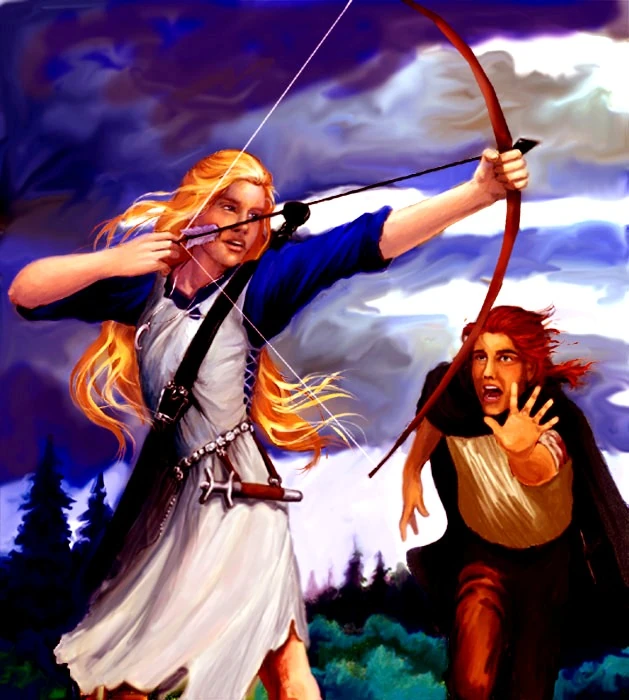
Dalben and Taran, beautiful illustration by Tim Probert
Another fantastic character is the girl Eilonwny. You could think of her as a precursor to Hermione, sort of a cross between her and Luna Lovegood. For you non-Harry Potter fans: read strong willed independent, quirky to borderline odd. That is admittedly a male perspective: she does fall prey to certain stereotypes, namely that of expecting Taran to speak to her in a decidedly female way.  For example when Taran asks her to stay with him he does so by merely assuming her interest and instead of asking he directly. Still her quirkiness makes her a very enjoyable character that certainly lives in her own right.
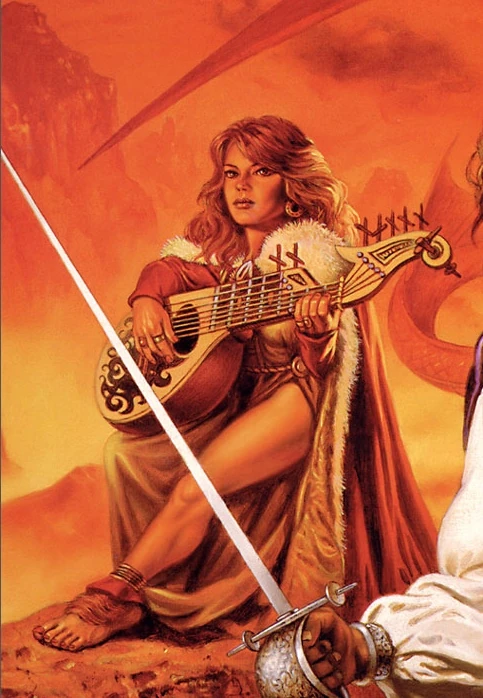
And who can forget Ffewdur the Flamm, a fulfillment of the Bard cliche, though of an unusual variety. Ffew has a magic harp that pops a string whenever Ffewddur lies, and strains the boundaries of credulity. Why is a twenty something former King, yes he gave up his kingdom to travel and live as an itinerant musician, ceding authority to Taran, a fourteen year old boy? He gives a reason, several times, but it still seems unlikely.  Regardless, he is a fun, stalwart addition to the team.

Eilonwy and Taran, no credit
Cliche:  one thing to note about all the cliches in this book: The Chronicles of Prydain were written in the early 60s, while Lord of the Rings was published in  1954. So at the time, these cliches were not cliches at all. The notion of dwarves and fair folk have been part of European lore for hundreds of years, but as writing tropes their existence was not nearly as well defined.  The Diamond in the Rough cliche is in pretty heavy use here. Taran is literally the lowest of the low, a pig-keeper. To be sure, he cares for a magical, world famous pig.  That ain't exactly nothing--but he knows nothing about that. Only that Hen-wen, the pig, is wise beyond her pig years and has the knowledge of the ages at its cloven feet. Still we know that Taran is destined for greatness.

Eilowny is a good example of the Quirky Girl cliche, and is probably a precursor for some of J.k. Rowling's characters. A quirky girl is slightly odd, she may be pretty but her youth obscures that fact. Usually quite clever and witty, quirky girls are good foils for over serious young men.  Eilowny's aunt fulfills another stereotype, that of the Ice Queen. An ice queen, harkening to one of Tolkien and C.S. Lewis originals, is a female magic user. Though there is no ice magic necessary to this stereotype, the coldness of the evil that animates their actions is palpable. It's interesting to note that evil male magic users like Sauron, are more often represented by fire. The ice queen breaks, or has a breaking point where her reserve flies into apoplectic rage. This is a common female stereotype.

Fflewddur represents the Bard cliche, though he is not your typical sort of bard, shrouded in mystery and a born lady-killer.  He is part of the story's comic relief and he fills another cliche in Humorous Sidekick.

The Big Bad, or Evil King cliche is also heavily prevalent. Alexander admits from the first that he has borrowed heavily from Welsh cliche, but he doesn't really get specific. Arawn and the evil realm of Annuvin seem direct analogs to Sauron and Mordor, but perhaps these cliches themselves were borrowed from an earlier mythology (I thought that Tolkien had adapted his Christian mythos--Fallen Angel, etc.) We don't see Arawn in this book, he is merely indicated. Alexander had intended to write a trilogy, so there is time to develop this plot. However the story has a more local Big Bad, The Horned King. Unfortunately there is very little character development for this enemy.
Another cliche would be the Animal Sidekick. Disney took full advantage of this when they adapted the second in the series, The Black Cauldron. Gurgi is a vaguely ape like creature loveable and hairy. He has hands and feet and can walk and ride. For example, in later books he even wields a sword. So a bit unusual for this cliche in that Gurgi is almost human. Alexander himself described Gurgi as on the awkward cusp between human and animal.

The Welsh cliche, King Arthur was a Welsh legend, and it's from him that we have the High King cliche. I spent an afternoon in Cardiff when I was a young man, and though in some respects it was a disappointment, owing to the fact that the castle is in a relatively modern town, but it did remind me of all those tales of King Arthur and King Math. The Welsh cliche, like the Irish cliche takes on a variety of naming standards like Gywdion, and Fflewddur, etc.  Thirty years later these cliches were used by ElIzabeth Haydon in her Rhapsody quintet: lots of unnecessary ys ls and cs. There is also, rather than the more modern divisions between elves and dwarves, simply a fair folk that encompasses all the strange and wonderful creatures of the natural world: including something of a Mother Nature cliche.
There is a powerful Druid-like humanoid who heals and protects the creatures of the forest. While he doesn't sprout leaves out of his ass or look like a giant tree, he serves as a popular fantasy link to a cult of nature worship present in most fantasy.

One interesting note: while there are no elves, per se, there is most definitely (spoiler alert) a link between the high King and his get, The Sons of Don and the Elvish summer kingdom, that is the concept, of a higher race of man, leaving the realms of earth for more commonplace men like Taran. This is evident by the end of the Chronicles, in The High King. There are many more cliches in the Chronicles, but I should probably save more of this material for the next book!

Completeness: this book represents an earlier era of fantasy. As such it's completeness factor stems more from good writing then from good world building. Alexander manages to pen, in very few words a world both convincing and complex. However, in retrospect it doesn't feel as deep as we've come to expect from even teen lit. There is no world map, nations are mentioned but not given a history. We know that the world of Prydain has many wondrous things: magical swords, baubles, old sages, fair folk (who appear to be dwarves) and an ancient evil, but in this first installment very little depth is given. Modern fantasy is very different. Now, I know that there are four other novels in this series, and that the world will grow with every installment, but this novel could really use an additional 150 pages; and if it had been written now, and not in the sixties, I am sure Alexander would have provided it.

For now, enjoy and treasure this piece of traditional and historical fantasy lit. Remember that so much of what we read today has Taran, Gwydion, Eilowny and Arawn at its great, warm, heart.

Thursday, March 10, 2016

The GODSOL's List of Fantasy Cliches and Tropes

Ok, so the post title is a shameless attempt to grab a little piece of Internet. I started this post a year ago, and almost gave up on it. Rather than going for a complete list, I'm going with a running list.  Now my names for cliches will not always match with the literary community.  In fact, I can almost assure you that they won't. So, any English majors who read this, and aren't totally disgusted by my writing, please drop a note about what you think the correct cliche name would be.  I can't promise I'll change it, but I can certainly make a note of it.  .

I would also like to state that my intent here is far different from Val Kovalin's List of Most Hated Fantasy Cliches.  I am not terrifically familiar with Val's work, but the intent seems to deride cliches as things that must be avoided in writing.  I revere cliches.  There are no bad cliches, there is only bad, lazy, and boring writing.  And there is a simple solution to that.  Put it down and find something else.  Having now found this list, I am going to avoid copying it as a courtesy to Val's copyright, but these cliches are VERY common, and I'm going for commonality in the naming conventions.  Val doesn't own the cliche, or the name of the cliche, only the list and his conceit that the cliches are a negative and profligate. Having read a bit of his list, I found it very distressing.  Almost all of the "most hated" cliches are cliches that have been used phenomenally well by prominent authors.  The list, seems to essentially be a collection of internet trolls on the subject of fantasy.

First, I will list them:

The Cliches:

Adventure Time Cliche
Advisor Cliche
Achilles Heel Cliche
Alignment Cliche
Ascension Cliche
Assassin Cliche
Band of Brothers Cliche
Beastman Cliche
Big Bad Cliche
Cataclysm Cliche
Chaos/Order Cliche
Chosen One Cliche
Coming of Age Cliche
Convergence Cliche
Christ/Christian Cliche
Dark Elf Cliche
Dungeons & Dragons Cliche
Diamond in the Rough Cliche
Dragon/Dragonriding Cliche
Dwarves Cliche
Going Crazy Cliche
Heroes Redemption Cliche
Elves Cliche
Evil Brother Cliche
Evil God Cliche
Fallen Woman Cliche
Femme Fatale Cliche
Hero's Redemption Cliche
Industrialization v. Nature Cliche
Innate Power Cliche
Kindness Cliche
Knight, The Cliche
Lord of the Rings (LOTR Race Cliche)
Norse Legends Cliche
Norse Peoples Cliche
Old Wizard Cliche
Play within a Play Cliche
Second Son Cliche
Shapeshifter Cliche
Sisterhood of Magic Cliche
Slave to Greatness Cliche
Sleeping Goddess Cliche
Telekinesis Cliche
Void/Abyss Cliche
Welsh Cliche
White, The/Good Cliche
World in Decline Cliche

Then I will group them:

General Literature Cliches
Achilles Heel Cliche
Advisor Cliche
Big Bad Cliche
Band of Brothers Cliche
Coming of Age Cliche
Convergence Cliche
Christ/Christian Cliche
Diamond in the Rough Cliche
Evil Brother Cliche
Fallen Woman Cliche
Femme Fatale Cliche
Going Crazy Cliche
Industrialization v. Nature Cliche
Play within a Play Cliche
Second Son Cliche

Fantasy Specific Cliches
Adventure Time Cliche
Alignment Cliche
Ascension Cliche
Assassin Cliche
Beastman Cliche
Cataclysm Cliche
Chaos/Order Cliche
Chosen One Cliche
Dark Elf Cliche
Dungeons & Dragons Cliche
Diamond in the Rough Cliche
Dragon/Dragonriding Cliche
Dwarves Cliche
Elves Cliche
Evil Brother Cliche
Evil God Cliche
Fallen Woman Cliche
Femme Fatale Cliche
Hero's Redemption Cliche
Industrialization v. Nature Cliche
Innate Power Cliche
Kindness Cliche
Knight, The Cliche
Lord of the Rings (LOTR Race Cliche)
Norse Legends Cliche
Norse Peoples Cliche
Old Wizard Cliche
Play within a Play Cliche
Second Son Cliche
Shapeshifter Cliche
Sisterhood of Magic Cliche
Slave to Greatness Cliche
Sleeping Goddess Cliche
Telekinesis Cliche
Void/Abyss Cliche
Welsh Cliche
White, The/Good Cliche
World in Decline Cliche

Now I will post a brief description of  each.  The reason for the duplicative nature of this list is that I intend this post as a resource for writers, reviewers and other thrill seekers. This list is simply alphabetized:

Achilles Heel Cliche: Simply put, a fatal flaw, a weakness of character that may or may not be obvious, but will despite all odds to the contrary be exploited by the author to illustrate the illustrate the concept that the Greeks knew as hamartia.

Adventure Time Cliche: An older cliche, more prominent during the advent of table top gaming.  Like the Dungeons & Dragons cliche, but not focused on individual races and monsters.  This cliche refers more to the style of writing as being very much the way a Dungeon Master might narrate a real table top game. Characters have turns, they swing, they miss, they swing again.  It sounds stilted, but good authors can make these sorts of yarns work in their favor.  Paksenarrion followed this format.

Advisor Cliche: This cliche is a general literature cliche, common in situations where the main characters are counseled by a false friend, someone who pretends to have the MC's interest at heart, but actually seeks to push his own evil agenda.  Perhaps the most famous evil Advisor is Wormwood from LOTR, poisoning the ear of King Theoden, and in that case also literally poisoning him. Rasputin, Karl Rove, and Steve Bannon all fall into the evil advisor categories, though the ladder two served bad people as well. There are good advisors as well, in Martin's Game of Throne's the men who graduate from the Citadel, and are distributed among the Lords to administer wise counsel.

Alignment Cliche: In Dungeons and Dragons, and in hundreds of video games created on that gaming model, there is a stage in character creation when you get to choose your character's alignment.  Lawful Good, Chaotic Good, Neutral Good, Neutral Evil, Chaotic Evil, and Lawful Evil.  For a full list check out the list at easydamus.com.  While these cliche's are obviously tropes, they provide the gamer with a reference point for how their character reacts to new stimuli.  A Chaotic Evil barbarian might see a random dwarf, and attack him immediately.  Why? He's chaotic, and he's a racist bugger.  This cliche is reserved for fantasy books in which those distinctions are really really obvious, D&D based fantasy is a clear example.

Ascension Cliche: The concept whereby a being evolves, grows or ascends toward a higher level.  Though this concept occurs often, it has been brought to an art form in the works of Steven Erikson, whose characters frequently ascend from mere mortal to demi-god, or greater, through actions, events, great suffering, purifications. Here is the TVtropes definition.

Assassin Cliche: the Assassin Cliche is a type of warrior.  The cliche includes the physical attributes of poisons, darts, daggers, stealth, tripwires, garrots, forced/stealth entry.  It also includes the mental attributes of darkness, cold-hearted killer, loneliness, unfriendliness, watchful, distrustful, suspicious, careful, depression, and, of course, the one job the assassin will not take: the last vestige of humanity.  Notable assassins include Hugh the Hand, Kalam Mekhar, Durzo Blint, Artemis Entrieri, Achmed the Snake. Juliana Haygert has assembled some popular TV and Film assassins here.  [MAKE NOTES IN COMMENTS AND I WILL ADD NAMES]

Band of Brothers Cliche:  A small group, usually soldiers, who face particular massive extremity together and come to certain understandings, either of love, trust, companionship, or loyalty.  The particularilty of the extremity matters.  Soldiers who went through one battle, or a series of battles, are not necessarily bonded to another group, even within the same army, or the same conflict.  This is a common fiction and non-fiction cliche.  In fantasy I would name certain companies of the Malazan Army (Steven Erikson), as well as Glen Cook's The Black Company.  In real life, I've met many soldiers who would sacrifice all bounds of commonality among people for their chosen brothers.  Again, TVTropes has an excellent entry on this cliche.  Note that I did not get this name from this site, but anytime my names match up with others', I am thrilled.

Beastman Cliche:  The Beastman cliche is an older fantasy cliche, a warrior, druid, barbarian, ranger type who bonds with a spirit animal, or several.  S/he can command the obedience of animals, communicate with them, and in some cases even inhabit them or transform into them.  Examples abound, the sorcerors of the Belgariad (David Eddings) who transform into wolves, Fitz from the Farseer Trilogy (Robin Hobb), Bran Stark with his Direwolf (George R.R. Martin). [MAKE NOTES IN COMMENTS AND I WILL ADD NAMES].  I was unable to find a direct correlation at TVtropes.  Which is a good thing.  There is the Resist the Beast cliche, certainly a part of the Beastman cliche, and also the Voluntary Shapeshifter (and Involuntary Shapeshifter) all of which share similarities to the Beastman.

Cataclysm Cliche:  This is a cliche often used to "explain" the genesis of a fantasy world from the present day.  Frequently used in Sci/fi and crossover fiction.  A massive earthshaking Cataclysm, sometimes man made, sometimes nature driven has destroyed much of the world's population, all of the world's culture, reshaped the entire planet.  It is linked often to the World in Decline cliche.  Some examples would be The Dark Tower Series (Steven King), Jordan's Wheel of Time, the DragonLance saga, various Final Fantasy videogames.  The Cataclysm Cliche allows an author to immediately posit an ancient history, while allowing a sufficient break between then and the present such that s/he need only allude to past greatness in the form of ruins and ancient artifacts.

Chaos/Order Cliche:  This is probably one of the most common fantasy cliches.  It is a more modern substitute for good and evil, popular since it implies less morality and more "certainty," as chaos has a pretty obvious and uncontested definition.  It also harkens to the D&D cliche of character alignment.  The forces of chaos are generally pretty bad.  This topic is worthy of a book of its own, so rather than discuss it here in full I will list some good examples.  L.E. Modesitt's Saga of Recluce has the most spectacular treatment on the subject, actually giving some credence to chaos. Erikson's the Crippled God, whose powers are essentially chaotic in nature.

Chosen One Cliche: [IF ANYONE KNOWS A MORE COMMON NAME FOR THIS I WILL CHANGE IT].  Fate has chosen this young person, either by heritage or genetics for greatness.  S/he has a power, often foretold by prophecy that will allow her to defeat the evil or Big Bad.  I would say 75% of all fantasy epics use this cliche.  Notable exceptions are George R.R. Martin's Game of Thrones, and Erikson's Malazan epic.  Some classics include Rand al'Thor (Robert Jordan), Shea Shannara (Terry Brooks), and Harry Potter.  Potter's "chosenness" is up for some debate, but he is literally called the Chosen One, and fate did make him uniquely capable of defeating Lord Voldemort.  The Chosen One cliche is a favorite of the teenage crowd, an homage to the idea that there is something special about "you." A comforting notion, that.

Christ/Christian Cliche:  I am not one, nor am I well-versed in the large amount of symbology of Christianity.  But there are a few obvious ones.  Resurrection, Rebirth, Saints, Temptation, 12 apostles, the Cross, the Betrayal of Christ, the West, Water to Wine, Miracles, His Life for Yours.  These are common memes in fantasy.  It's one thing to use ressurrection, it's something to different to ressurrect as Aslan did in Lewis' Chronicles of Narnia.  Lewis was a very religious man, his Screwtape Letters being tongue-in-cheek instruction manuals for young Christians.  Tolkien and Lewis bonded over their Christianity, and indeed Gandalf's transition from the Grey into the White, as well as both Saruman's and Sauron's fall into temptation reek of Christianity.  Fantasy is frequently moralistic, but modern fantasy has managed to segregate these themes from a belief in a Western style Christianity.                              

Coming of Age Cliche: This is a standard literature cliche.  There is very little fiction that doesn't use this cliche.  A young character, innocent and ignorant of the world, loses said innocence, becomes a little less ignorant.  Usually this occurs through a fair amount of suffering, physical, and mental trauma.  The upshot of the Coming of Age cliche is a character change that provides a vector for the story's growth, and allows fairly simple plot-based story to advance to something a little deeper.  Some examples in fantasy would include Harry Potter (J.K. Rowling), Shea Shannara (Terry Brooks), the Eye of The World (Jordan), Garion (David Eddings)

Convergence Cliche: Though a convergence of fell forces is a common occurrence in fantasy, Erikson's Malazan Epic enumerated this cliche in a way that spoke openly and didactically about the nature of the tactic.  Simply put, a variety of powers, strengths, armies, warriors and spell casters find themselves converging on a single event, a battle, a quest, the search for an artifact, a defense against evil.  Spectacular forces are released, many are killed, everything changes and then denouement.  One neat thing about Erikson's world is that it acknowledges that history is a series of convergences, not the lead up to a dramatic and final conclusion.  In Terry Goodkind's

Dark Elf Cliche: A Black Elf, who instead of representing pure good, represented pure evil.  It's disgusting now, as a cliche.  And points to a continued and pervasive racism in common in fantasy memes.  It's a legacy of the 80s, and Forgotten Realms in particular, as evil Elves in the Tolkien era were twisted by Sauron into the Orcs.  Still, it's common enough to deserve mention.  Dark Elves are dark skinned and white haired, but have the same delicate cast to the features, high cheekbones, narrow chins/faces, slender of regular elves.  They also are magic users and frequently worship elven gods cast out of the pantheon by their godly brethren.  By far the most famous is R.A. Salvatore's Drizzt Do'Urden, who rejected the evil nature of his birthright and left his subterranean habitat.  Another example would be from the Marvel Verse, as enemies to Thor's Asgardian compatriots.

Diamond in the Rough Cliche: Another general literature cliche.  The concept of good buried unseen in a character.  Often used in tandem with the Chosen One cliche.  As the Chosen One is frequently a Diamond in the Rough.  However, the Diamond is a little less hackneyed, as it can be a character who is simply good, talented and hard working, rather than one fated for greatness.  Though there must be many examples, I can really only think of minor characters.  [HAPPY TO INSERT EXAMPLES, LEAVE IN COMMENTS]

Dragons/Dragonriding Cliche:  Dragons are smart, have two to four legs, independent of two bat like wings.  They range in size from that of a small dog to that of a two story house.  Dragons are one of the earth's oldest myths.  I won't pretend to scholarship, so here is a list of links from the Smithsonian.  One thing that is common in the cliche is that the magic inherent in dragons is that they cause immense fear/awe.  They also  can transform into humans.  Dragonriders of Pern, DragonLance, The Hobbit, Malazan Book of the Fallen, the Magic Ship Series are all good examples of common dragon use.

Dungeons And Dragons Cliche: There is a lot to unpack with this one.  It involves a plethora of different cliches, race, class, alignment cliches, heroes parties, dragon, orc, goblin, dwarf, elf, etc.  It also involves a battle system and a spell system that have been reproduced in videogames, television and film.  There is some dispute in the community about the genesis of D&D and the Lord of the Rings Cliche.  That original versions of the D&D gaming system borrowed heavily from Tolkien is undisputed, whether the borrowing was a lack of creativity or a blatant play to attract a burgeoning fantasy market is unclear.  Use the D&D cliche to evoke the LOTR cliches without the religious subtext, the One Ring to Rule Them All mythology, the age in decline cliche.

Dwarves Cliche: Solid, small, super strong, subterranean dwellers.  Long beards, helmets with horns, battle axes, big noses, long-lived but not immortal. Crusty, irate, drinkers of dark brewed ale. Never the main hero, never a love interest.  Have almost addictive personalities when it comes to gold and treasure. Great craftsmen, armorers and weapon smiths. Hate magic. Also, "they dug too deep" and discovered a great evil is a cliche within the dwarven cliche.

Elves Cliche: Lithe, skinny, strong, tall or short depending on the fantasy. Lovers of nature, worshipers of trees. Fantastic archers, skilled with swords. Invested with magic, beloved and symbolic of good. Skilled magic users. Great trackers, skilled at woodcraft and stealth. Lives in forest communities.

Evil Brother Cliche: the evil brother cliche is common in fantasy, but it can be seen elsewhere as well. In a medieval setting, two brothers one born to Kingship, the other merely a spare, the evil brother can frequently pair with the Second Son cliche.  Also, in some works the Evil brother can be a twin, or half brother separated at birth. Some Evil brother action: the Farseer Trilogy (Hobb), Various versions of Robin Hood pitting King John against his elder brother Richard. See also the Second Son cliche.

Evil God Cliche: evil gods are a staple in fantasy fiction. Given that fantasy is frequently posed in a medieval world, it is odd that a large pantheon of gods are so prevalent, when the historical
equivalent was monotheistic. Evil Gods exist within the pantheon of gods, frequently cited as the need for balance, or a response to that which is worst in man. Frequently they begin as merely gods of vanity, fallen by arrogance into depravity.  Some examples: Torak from the Belgariad (Eddings), Bane from Shadowdale (Awlinson), then Crippled God (Erikson), Shaitan from The Wheel of Time (Jordan). The problem with the evil god cliche is that even an evil god is still a god, and when evil gods start start talking, they sound a lot less godly and a lot more petty and contrived.

Fallen Woman Cliche: not a common fantasy cliche, though as the genre has grown up considerably in the last thirty years it is becoming more common. A Fallen Woman is a character, main or side, whose virtue is not merely tainted, but utterly and willfully compromised. For a genre that still uses old sexist tropes like a freeing a maiden from a dragon, or rescuing a princess from an evil witch, having a fallen woman, a woman who enjoys sex, and has it with more than one partner. Who is too cynical for love, or is so blinded by hatreds and jealousies. Expect to see the Fallen Woman more often. By far the best examples are within the Malazan epic (Erikson) Felisin and Scillara.  The first, a noble woman, cute, curious, and loving, was sent to become a slave in a mining camp. She becomes a whore and a drug addict, and even after she is saved from the mines, her attitude is irreparably damaged, and she becomes a true anti-hero. Scillara on the other hand, is a whore, born of a whore, who gains freedom, finds love, and chooses to give up her child literally minutes after the baby is born. There is much to say on this topic, and it is a difficult discussion to have without resorting to sexism of any type: offensive, blatant, implicit, second-hand, micro-aggression.

Femme Fatale Cliche:  A strong woman.  Honestly.  That said, to use more common language, a beautiful woman who uses her charm, intelligence, and sexuality to manipulate men.  She can be killer, but is not necessarily a killer as much as believer in justified expedience.

Going Crazy Cliche:  I have written of it before as the "Am I Going Crazy?" cliche.  In essence, the main character begins to experience things so strange and irreconcilable with reality that he begins to seriously consider the possibility of suspecting his own sanity.  This is a general lit cliche, though used frequently in fantasy.  Used by authors to explore the rational mind's capacity to handle that which is clearly impossible.  A variant of the Going Crazy cliche is the Acting Crazy cliche, made famous by Shakespeare's Hamlet.  In fantasy, this is typically used to explore character's burgeoning new skills and abilities, see Rand al'Thor of the Wheel of Time. And written about in the above link on Sanderson's Way of Kings.  It also supplies a useful foil for alienating characters from their friends and family.

Hero's Redemption Cliche: This is a standard lit cliche, and a fairly obvious one.  There must be a better term for it. If so, leave it below in the comments.  In fantasy, it occurs fairly frequently as a general story arc, in which a benighted character finds his honor, learns to love again, makes good on a promise, etc..  This cliche taps into the concepts of deep rooted shame, and is very effective for building character motivation, as well as for shaping story arc.  Think Sturm Brightblade, Rand al'Thor.  This type of cliche occurs in epic fantasy more often then not.  In more modern fantasy, or dark fantasy, there is frequently no, or little redemption offered (though the cliche is still operative by mere dint of expectation).

Industrialization v. Nature Cliche: A common fantasy cliche, the idea that "progress" loosely defined as an efficient means of doing things, including mass farming, factory production, munitions development and "horse-less carriages" leads to a rapid urbanization that destroys the environment, as well as destroying the rather bucolic idea of simple living.  Frequently, the cliche leads to a nature "striking back" in a typical man v. nature dialectic.  Sometimes this cliche is paired with the Cataclysm Cliche, it is a very moralistic take on fantasy, though as a meme it occurs quite often.

Innate Power Cliche:  This might be duplicative of the Chosen One cliche.  The idea however relates more specifically to the powers, attributes or magic system pertaining to the story at hand.  One thing is clear, power is internal, given at birth, and though it can be shaped, trained, developed and honed: you either got it or you don't. The One Power from the Wheel of Time (Jordan) is very like this.  Some people just win the genetic lottery.

Kindness Cliche:  I've written often that fantasy is by nature liberal.  Kindness isn't really a cliche, but it figures heavily in fantasy.  Kindness is the seminal virtue of Tolkien's hobbits.  They aren't tough, strong, quick, smart, or particularly nimble, but they happen to have big hearts and they see the world of Middle Earth through our eyes.  Almost every single great fantasy novel of the past fifty years uses Kindness as its fundamental virtue.  George R. R. Martin being an outlier, but that said, ASoIF's greatest heroes, Jaime, Tyrion, Jon, and Bran all are quite kind, though it wins them little.

Knight Cliche:  The Knight's physical attributes are obvious, full-length plate mail, shining armor, penants, chargers, lances, mustaches, beards, doublets, and sigils.  He believes that what is lawful is what is right, true, and honorable, and can be quite inflexible.  The knight is a militant cleric, though not a true paladin with healing powers of his own, belonging to an order steeped in a militaristic tradition with various ranks, and often believing or serving a single deity.

Lord of the Rings (LOTR Race Cliche): this cliche doubles with the Dungeons and Dragons cliche, and there is continued dispute on the provenance of such creatures as elves, dwarves, orcs, hobbits, and goblins.  However, the LOTR cliche doesn't come with any of the gaming nonsense, the binding to rules of spell casting, character alignments, etc.  The LOTR cliche is also tightly bound to the Dragon Cliche, the Evil God cliche, and the Christ/Christian meme.  But, in a sentence, the cliche simply includes the race types common in all modern post-Tolkien fantasy, and all the cliches discussed above and below.

Norse Cliche:  All modern cultures have a pre-industrial, medieval history, and it is these histories that are most often drawn upon in fantasy.  The Norse cliche, is used frequently, most recently in my reviews by Joe Abercrombie in his Shattered Sea books.  Think longships, oarslaves, throwing axes, men with beards, cold weather, etc.  The gods of course, made popular by Marvel, Thor, Loki, and a host of others.

Old Wizard Cliche:  The precursor for the old wizards are obvious, Merlin and Gandalf.  Men of mystery who are ancient, frequently living hundreds of years.  Long robes with arcane symbols, funny hats, staves, long beards and pipes.  There is also, in many of these Old Wizard types, a sly sense of humor, likely originating with Gandalf.  Their powers depend largely on the world created for them, and more modern Old Wizards tend to have at their command much more immense powers than their older counterparts.

Play within a Play Cliche: a non fantasy cliche, used often in the genre to provide backstory.  Either it's a story told around a campfire, a song, or a flashback.  Also, like in Hamlet, there is sometimes an aspect that is not merely historical, but meant to shine a crooked light on the current situation.

Second Son Cliche: The Second Son cliche is a medieval favorite, but it contains a lot of variance.  Historically, the first son stood to inherit, so the second son was inline to inherit some smaller portion of wealth, Or nothing at all.  Of course, given the life expectancy, and the tendency for first sons to die in war, or of a variety of other reasons, second sons frequently inherited.  Still, being second best, has been a meme in fantasy novels, and it creates a variety of different character types.  An excellent example of both of the most prominent types, The Loyal Son, and the Wicked Son, can be found in the excellent Farseer Trilogy by Robin Hobb. The loyal son, is the one who was taught to be second fiddle to the first son, and embraced the position with great gusto.  The loyal son, forced to rule, is either forced to discover new character reserves within, or to wilt beneath the pressure.  The wicked son, obviously, attempts rebellion as a sop to his perpetually wounded ego. See also the Evil Brother cliche above.

Shapeshifter Cliche: This is a pretty obvious cliche. Usually part of the menagerie of a fantastic world, the shapeshifter is generally a monster that can assume various forms to employ deception.  Sometimes however, it is used very effectively as a main character trait: druids who can assume the shape of some totem animal, wizards who can turn into eagles, impossibly strong alien races who can transform into dragons (Anomander pu'Rake of the Malazan Book of the Fallen).  Though these are variants on the cliche, part of the basis of the cliche involves the distrust one would feel towards something that is not what it appears to be.  This entails some aspect of prejudice, particularly for those who do so for deceitful or manipulative ends.

Sisterhood of Magic Cliche/The Coven Cliche:  As with anything women oriented, this cliche is steeped in an ancient history of sexism that bears thinking about.  Just not here.  The cliche is simple, women with power gather, and those women form a society with rules, rituals, and history.  Sometimes those women are witches, and are hidden, fleeing from persecution: think any book or movie about witch craft.  Sometimes those women are sorceresses, and are adjudicators of law and principle, (Aes Sedai, from Wheel of Time, Confessors from The Sword of Truth), and sometimes they are nuns (which is likely another antecedent of the cliche) such as the nuns who take King Arthur's body when he dies.  In almost all cases, these cliches are steeped in a world history of sexism against women, even in worlds where they are revered.

Slave to Greatness Cliche:  Like the Diamond in the Rough Cliche, this cliche relates to someone who is as nothing, who becomes great, surpassing all that stands between him/her and glory.  Unlike the Diamond in the Rough Cliche, a slave is so much more downtrodden, moreover slaves, obviously have experienced such horror, ignominy, shame, backbreaking labor, and abuse, that their flowering is much more cathartic (though frequently riddled with pathos).  Such characters rise above their enslaved circumstances, but frequently the scars obtained during their time of servitude is impossible to overcome.  Some good examples include Raymond Feist's Magician Pug, Yarvi, from Abercrombie's Half a King, and Kaladin, from Sanderson's The Way of Kings.

Sleeping Goddess Cliche: The sleeping child is a very common religious theme, here's how it goes, the Earth is actually a dragon, or a titan, who settled down for a nap millions of years ago, and hasn't woken up.  One day he shall wake up, and the destruction of the world is assured.  I had difficulty tracing the origins of this particular myth.  I had thought it was Norse because of a review I read last year, but since then I have been unable to dig it up.  That said, it's existence in popular culture is very obvious.  For one, Steven Erikson's Malazan epic, is based on the idea of Burn's Sleep.  Burn is the being at the center of the earth, and it is she that the Crippled God has poisoned, because he wishes to destroy the world.  Transformers Prime, the cartoon, has Unicron, the Transformer God of Evil at the center of the Earth. Another good example would be the Hellfire Club of X-men renown.  The Hellfire Club worship the Phoenix, who they believe has been dormant in the center of the Earth, and will wake up one day, inhabit a young hot red head and "reform" the planet.  In Hayden's Rhapsody trilogy, the F'dor, the demons locked in a gravity well at the center of the Earth, want to wake up the Sleeping Child, in this case an enormous dragon.  The dragon will wake up, shed the earth around it, and raze the rest.  Sidebar:  Googling the "sleeping child/dragon at the center of the earth' was an education on just how crazy the internet is.

Telekinesis Cliche:  This cliche is misnamed, and I'm happy to change it.  Another way to phrase it might be David Edding's "Will and the Word."  It is a magic system where all that is needed to cast spells, and to exert magical power is will power.  It includes lifting objects and throwing them, often it empowers the user to flight.  Telekinesis is in direct opposition to the older and more classical view of magic, which uses spell components, arcane lore, and requires a lot of study and knowledge.  Possibly the best example of telekinesis is from the cult Japanese hit, Akira.  The character Tetsuo's powers of telekinesis destroys New Tokyo.  In modern fantasy Telekinesis is more normal than not, examples abound.

Void/Abyss: In recent years, as Dark Fantasy has taken root, and more sophisticated notions of good and evil have become mainstream, the notion of the Void, or the Abyss has grown in use as a fantasy cliche.  Evil wears many faces, but ultimately, as St. Augustine put it, "And even when men are plotting to disturb the peace, it is merely to fashion a new peace nearer to the “heart'’ desire; it is not because they dislike peace as such.  It is not that they love peace less, but they love their kind of peace more." Modern fantasy has greyed the lines of good and evil so thoroughly that the new evil, is to destroy the world.  Not to rule the world, not to commit acts of depravity, but to destroy it because the emptiness of the void is natural state of the universe.  There are other notions of the Abyss, of course, Hell, or Hell on Earth, but even so, Hell is rather busy, full of winches, and fires, whips and grinding gears.  There is also, from the Never Ending Story, the idea of the Nothing, a billowing black mass that devours the world and everyone, good or bad, within it. Another instance might be the end game of Sanderson's Way of Kings Big Bad. The Abyss is a particular kind of bad end, because it doesn't represent greed, corruption, decay, and enslavement.  It is the cold void of space, and it is terrifying.  Also important to note, Nietzsche's famous quote, When you peer into the void, the void looks into you!

Welsh Cliche: The use of Welsh myths, names in fantasy.  That includes Arthurian legends.  Naming conventions use extra l's y's and f's in names making them generally unpronounceable to English tongues.  Good examples, The Once and Future King, The Chronicles of Prydain, Elizabeth Haydon's Rhapsody Quintet

White, The/Good:  The White Cliche is a term, I've stolen from Stephen King. From the wiki, "The White is the force of good that is led by Gan. The people of the White are allied together to protect the Beams and the Dark Tower from falling and stopping the world from moving on. It is the elemental force that represents wholeness, unity and health. They fight against their counterpart the Outer Dark which is led by the Crimson King." While that is all directly related to Stephen King's worlds (all of his worlds in fact) the point is clear.  Good is good.  It's in every fight and every fantasy.  The White applies even in dark fantasy where moral ambiguity abounds.  I could write pages on this cliche.

World in Decline: The World in Decline cliche is another popular sci-fi/fantasy cliche.  The entire genre of post-apocalypse fiction uses the cliche as a motivating concept.  In fantasy its application is used to explain why the society at hand is perpetually stuck in a non-progress loop, i.e. no technological development or liberalizing social movements.  A World in Decline was once great, and shows evidence of a truly majestic, but now dead society.  The current inhabitants of which dwell among the ruins.  One interesting note about the World in Decline cliche is that a happy ending in a declining world does not necessarily mean that the non-progress loop can or will end.  Perhaps because if it did, then it forces the recognition, both for the reader, and the author, that when they close the book and lay it down on the table, they are faced with the realities of what progress portends.

---- GODSOL, 2016


Though I did not use this list to create my own, this list of fantasy cliches is an excellent one, and should be viewed as well:
http://silverblade.silverpen.org/content/?page_id=73

Wednesday, January 13, 2016

The Wyvern's Spur by Kate Novak and Jeff Grub

This was one of the best Forgotten Realms novels yet. Not only did it occur within the standard realms, a fortified town in Cormyr, it had some truly loveable characters.

It was not a complex novel by modern standards, but after the sanctimonious and cliched writing of the Ice Wind Dale trilogy it was a great relief. The novel continues the events of the Curse of the Azure Bonds, popularized by the SSI one of the earliest PC games in history.  However it takes as it main character a complete nonentity, as we used to say in the biz an NPC, or non-player-character, a drunk partygoer who mimicked the King and nearly died when Alias tried to kill him. But before we get any further let me state simply and for the record: The Curse of the Wyvern's Spur is a thoroughly enjoyable novel.

Character: so the harmless partygoer is named Giogini Wyvernspur, and he's a delight. Foppish and insecure, but undeniably good natured, he returns from the mission that the King sent him on and his apartments in the city suddenly seem too small. He's been bitten by the adventure bug and for the first time in his life he's doing things for himself. His manservant is astonished! When he comes home, he returns just in time to find out that the Wyvernspur family, of which he is the primary heir, has just lost the magical artifact that gave the family it's name. Meanwhile his Uncle, an old but powerful wizard has a very important message for him. The novel is almost written as a mystery novel, which is a nice twist for fantasy, unusual too.

There are only two other characters of note: and one of them is a mystery. The other is Olive Ruskettle. If you remember Azure Bonds at all, you"ll remember the Halfling bard, Olive Ruskettle, whose desire to create a lasting melody provided the foil for The mystery of the azure bonds and the nature of Alias. In this novel, she finds herself back to her thieving roots, having taken on an apprentice. Her apprentice is Alias! But not really, apparently this area of the realms is chock full of Alias copies. Each a different class, none of whom has any idea of her mysterious parentage or fabricated nature. But back to Olive: she is probably the most interesting Halfling character I've read: in general I find them sort of boring.  Like dwarves, they tend to be very one-sided, in the opposite way. They are carefree, disloyal, low level fighters, or thieves. Olive exhibits these tendencies of course, what good a cliche if it's use is completely dissociative. But she also displays real leadership, particularly in Spur, given Giogini's befuddled nature. She seems to have a genuine history if not particularly well explicated, there is a third volume in the series: which if she plays a part will make the Alias trilogy really the Ruskettle Trilogy. Of course there are disappointments, Olive is "spurred" (haha) to help Giogi because of grief over her apprentice's sudden demise, but that grief, though referenced often enough is just not written convincingly.  In part because we do not know much about her slain friend: which brings us to the third character of note, the Alias look alike.

I don't even remember her name, an indication of how soft this part of the story is. Like so many love interests she is a soft amorphous blob, not saccharine, she displays rare moments of pique, but is just not very interesting. That said, this is often true in narrative fiction so maybe it's unrealistic to expect in pulp fantasy.

Cliche: we've mentioned the Halfling cliche, what's interesting about this is that what really made the Halfling cliche were Tolkien's hobbits. The hobbits of the Shire are really very charming, quaint and amusing details abound them really bring such characters to life. Unfortunately this charm almost never translates to D and D.
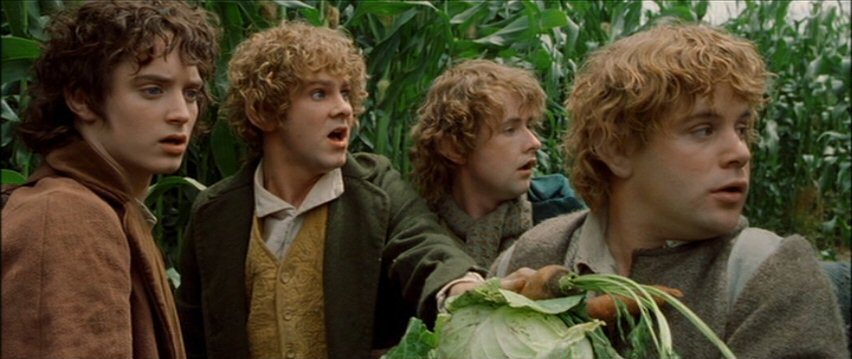
Hobbits everyone knows and loves


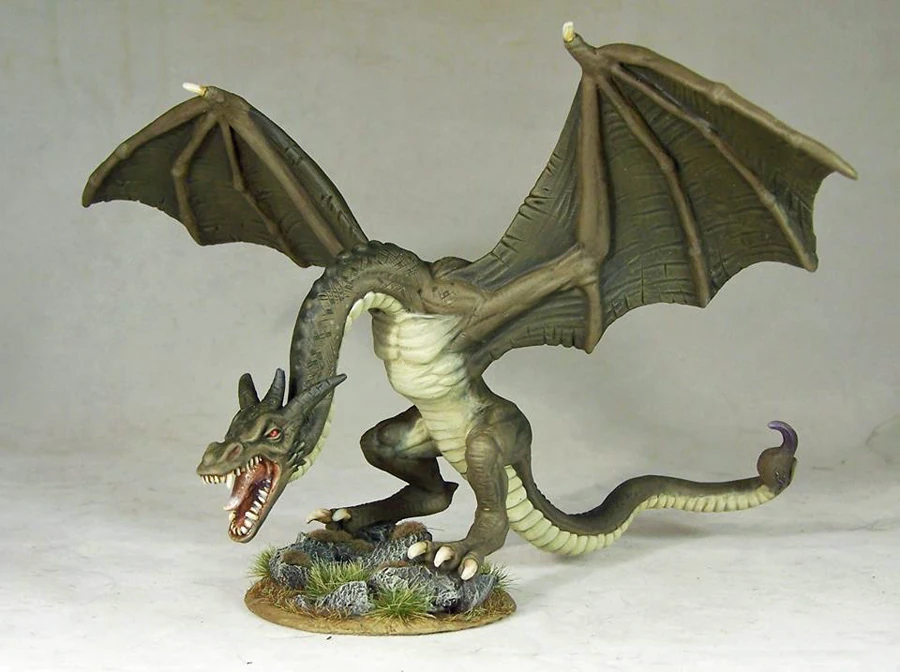
The Wyvern cliche is a relatively minor one, possibly not even worth mentioning other than the fact that they are smaller, armless dragons of lower intelligence. They do translate across fantasies, notably Erikson's Malazan epic has a small if memorable place for them.

Obviously all the D and D cliches apply. One cliche that sticks out a bit in this book is the magic-user D and D cliche, including: the mechanics of spell book casting, magical properties of spell components, scrolls, memorization etc.  It reminds me that aside from historical accuracy (relative accuracy) the main reason for such contrivances was to impose limitations on characters that would otherwise be far too powerful in a game setting. Compare that with the sweeping powers of Anomander Rake or Rand al'Thor. The limitations provided an additional layer of strategy. Fighters went forward to cover the firepower of spell casters. Spell casters could exert enormous force on massive monsters or provide a distraction to beleaguered fighters. I still remember the Fall of Pale from Gardens of the Moon and how it shattered my spell casting memes.


Another cliche explored in this novel, a more generalized cliche is the Whose Yer Daddy cliche. Given the preponderance of this cliche in literature I'm sure there must be some more technical name, but I can't resist it: who's your daddy? The cliche for children with mysterious parentage. Rand al 'Thor, Garion from the Belgariad. In this case, Giogi's father was a great adventurer whom the Crown relied on for certain dangerous tasks. Of course, Giogi's Aunt Dorath, herself a colorful, if minor character, hides the secret of Giogi's parentage.

Which brings us to Completeness. This novel is a tightly polished miniature puzzle and all of the pieces fit together extremely well. It has drama, love, high magic, the undead,and best of all a genuine warmth and sense of humor. It is self contained and there is no sense that the third novel in the Alias series will have anything to do with Giogi (more's the pity.).  We did learn a bit more about the Realms, about the nation of Cormyr. King Azoun, part of a long running dynasty is a relatively fair ruler. There is an interesting form of patronage at work: successful adventurers can be given land and title as governors of the land though they are not granted nobility and the title does not pass through the family  line, unless the governor marries into the local nobility.  One nice thing about the story is that since it stays in the same locality a few nice details have time to come about.

So, on the whole, this is a decent novel and might even be with a reread a few years from now. High praise indeed for a Forgotten Realms novel.

Monday, October 5, 2015

Halfling's Gem by R. A. Salvatore

Given the empire of Forgotten Realms fiction that R.A. Salvatore has put upon this earth (nearly 22 novels), you'd think the first three novels of his would be classics. Forbes did a great interview with the author, and in it Salvatore gives us a plausible reason for this:


“You don’t have to start at the beginning,” he tells me. “Contrast that with George Martin or Robert Jordan and the way they did their series. You couldn’t pick up the sixth book of Wheel of Time and read it, I don’t think, if you hadn’t read the first five. With the Drizzt books you could pick up the 6th book, the 10th book, the 15th book, the 20th book. It’s more like Sherlock Holmes or James Bond.”

Of course, that is the very definition of pulp fiction, and why Martin and Jordan are hailed as serious authors who shook up the world of fantasy fiction.

Halfling's Gem was an atrocious train wreck that I barely feel deserves a review. Not as bad perhaps as Spellfire, but up there.

Halfling's Gem concludes the Icewind Dale Trilogy. The plot continues the drama between the Calishite assassin Artemis Entieri and the dark elf Drizzt Do'Urden, as they fight over possession of a Halfling thief. Also appearing for the first time, the man who put the price on the halfling's head, Pasha Pook.
Artemis Entreri


The plot ... is ok. Where this book repeatedly fails is in the juvenile level of the text. Juvenile isn't quite correct because even teen literature is often more nuanced.

Character: Halfling characters get the worst treatment. At least Douglas Niles and Kate Novak used female dwarves and halflings. The D and D rules made these characters pretty limited but creating an interesting back story could have at least made Bruenor more palatable. So SPOILER: Bruenor is assumed dead at the start of the novel having ridden a flaming dragon into the abyss. And a neat part of the book is the discovery and fight through the abandoned city, but for whatever reason Salvatore spoils the surprise for his characters and has the all knowing and all powerful Drizzt realize long before the reveal that Bruenor may yet live. Salvatore had a chance for his characters to explore the very real emotions of raw grief, and he shied away from it to point out, yet again, how cool Drizzt is.


Wulfgar is also pretty terrible. We discussed in my review of The Blade Itself the Barbarian cliche. Wulfgar is that cliche, no twist, no subtlety, if you wanted to describe the Barbarian cliche in one word, that word is Wulfgar. The emotions that Wulfgar feels are simple: love, anger and grief. About as skin deep as you can imagine. Grief is not the mere absence of that which is held dear, it is the cacophony of successive failures, missed opportunities and piercingly poignant memories replayed continually within a mind unwilling or incapable of stopping itself.

I guess what I'm saying is that Salvatore keeps telling us when he should be showing us. A classic writing criticism.  This was 20 years ago, I'm hopeful that Salvatore's technique has been honed by 20+ books.

Last, we have Drizzt, in the second novel in the trilogy we learned that he felt his meeting with Entrieri to be a fateful one. That there was a strange connection through skill of arms with the assassin. While this morbid curiosity might have added a dimension to Drizzt's personality, it fails as Drizzt is forced to utter trite truism after trite truism.  It's sad because I've begun to suspect that Drizzt is actually a fairly deep character. For example Drizzt is offered a magic mask that makes him white. And he uses it because people fear the drow. But he comes to quite enjoy the anonymity and access the mask allows him. The notion of "passing" is an extremely loaded one for African Americans and its place in this banal fantasy novel is notable. Another moment has Drizzt stealing a kiss from the unconscious Cattie-Brie. A kiss which is never addressed again. 

As a general rule: If you were to strike every single line of dialog from the book, it would be immeasurably improved.

Cliche: all the usual D and D cliches apply, so I won't waste any time but to list them: Dwarves, halflings, elves, Dungeons and Dragon's Race Cliche, barbarian.

Some new ones include The Kidnapping, the Middle East and the Thieves Guild.  The Kidnapping is pretty self explanatory: it's a common fiction cliche, helpless child/girl/Halfling taken by force on a long journey, vengeful heroes hot on the trail, always close, but never quite catching until the final pages. One difference here is that the Heroes give up catching the assassin fairly early on and simply make for the final destination. One famous example of the Kidnapping motif would be from Tolkien's Two Towers when Pippin and Merry get taken by the Orcs.

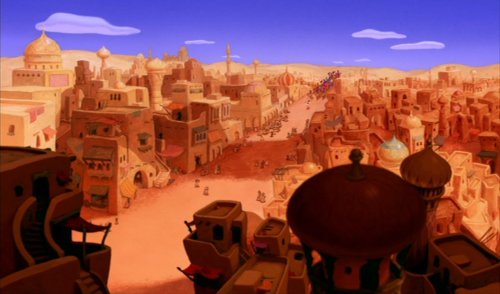
Agrabah, or Calimport by Disney
The Middle East cliche  is a common one as well, Calimport is clearly a middle eastern city, and it's denizens, though magical (halflings, humans and wererats follow the same dress and speech patterns. This type of Orientalism would be offensive to some, but the point of the cliche is to save time and space. Calling to mind a westerner's idea of a 1300th century Middle Eastern city provides leagues of description without straining the readers imagination.  As I get older, and my anthropologist wife teaches me to be more sensitive to and less tolerant of micro aggressions that form the undercurrent to overt racism, I begin to wonder about such tropes, and I begin to understand why so many authors have attempted to create whole new worlds, absent of these cliches.
The internets are loaded down with Skyrim images.  Best I could come up with.

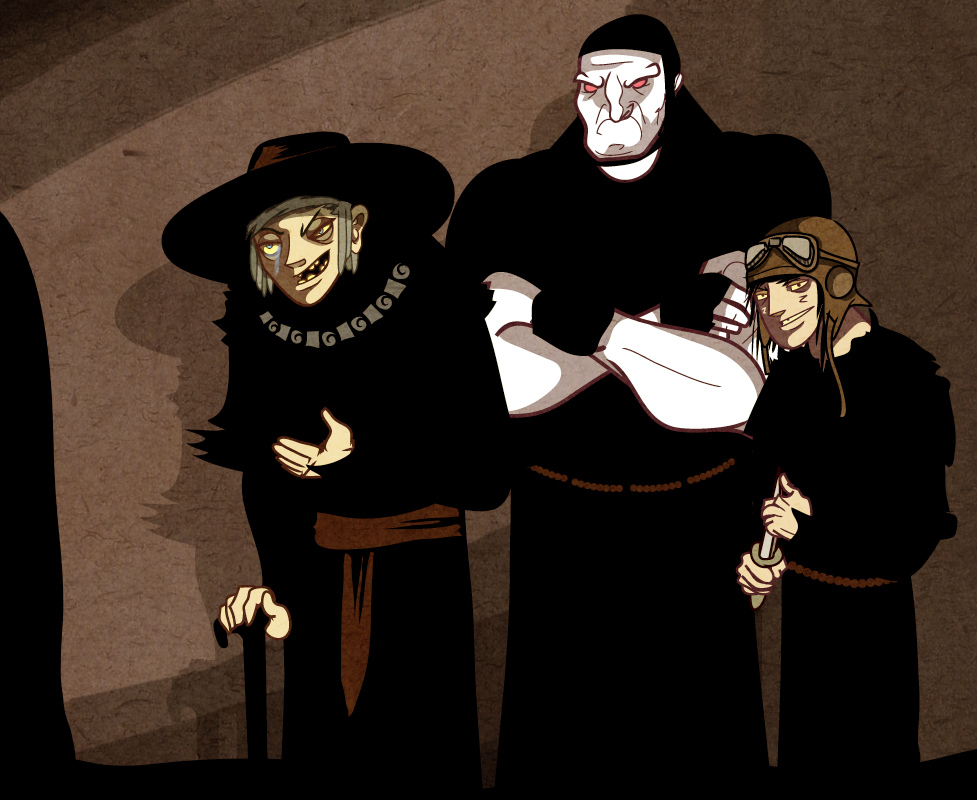
The Thieves Guild cliche is an incredibly common one in fantasy.  One the one hand it gives voice to a real world occurrence in a fantasy world, that of organized crime, and on the other hand, it speaks to the shadow economy that likewise exists in every city and state, the sale of untaxable, untrackable, and unregulated goods.  One thing that the Thieves Guild cliche does frequently in fantasy, however, is to neuter the more dangerous and pyschopathic elements of such a community.  To Salvatore's credit, his thieves guild is pretty despicable.  Pasha Pook the crime boss of Calimsport runs the guild with the aid of three henchmen, a dark wizard (fairly servile, as evil wizards go) the deadly assassin Entrieri, and a runaway pack of were-rats.  Though the subplot in Halfling's Gem of trouble in Pasha Pook's organization is never really explored or prevailed upon in any major way, it does give voice to the fact that such an organization would be almost impossible to govern.  But If you're looking for fantasy mafia stories to thrill and awe you, leave Halfling's Gem on the penny shelf, and pick up Scott Lynch's Gentleman Bastard trilogy.


Completeness:  Sadly, I think Halfling's Gem is not the end of this pitiful story.  As the action closes and the heroes sail away righteous and victorious, we know a larger battle is on the horizon as the dwarves of clan Battle Hammer are massing to retake the mines of Bruenor's father.  Still, this story does wrap up the unexplained nature of the halfling's powers and the mystery of how he obtained his magical gem.  It also sheds further light on several new areas of the Realms.

As I become more home in the world of the Realms, I see that there is very little overlap or common knowledge.  Virtually none of the stories I've read or reviewed so far even occur within the same thirty year period.  While, this excites me on some level to know that the breadth of the history of this place is huge, it also feels sloppy and haphazard in the retelling.  I have attempted to follow the date of publication for these books rather than take a timeline version of the books approach.  I chose that route because I want to see the vision of the realms as its actual creation was occurring, not as a second-guessed, revised version.  However, this choice has lead to some frustration on my part.  Right now the only common element is Elminster, and he's kind of crotchety and fallible for an Old Wizard type. 

On the whole, I'd say feel free to skip the Icewind Dale Trilogy.

Sunday, August 2, 2015

The Blade Itself by Joe Abercrombie

The Blade Itself is a phenomenal fantasy novel, blending elements of Conan the Barbarian, Jane Austen's 19th Century English romanticism/ victorianism, and a Glen Cook style of magic and majesty. As you know I reviewed Abercrombie's Half a King recently. I was nonplussed, the novel was entertaining but not what I'd been promised. My biggest complaint by far was the lack of detail. I wanted the novel to be 200 pages longer. Weighing in at over 500 pages, The Blade Itself is exactly what the doctor ordered. The level of detail is majestic. Characters are never simply speaking, they are talking while trimming blisters, emptying the chamber pot, or suffering terrible indigestion. It's mundane details like these that really make a novel come alive.  So once again, I must eat crow: Abercrombie is everything I was lead to believe and if you like epic fantasy with a dry touch of humor this book is a must read.
Logen Nine Fingers, Found on Cuded.com

Characters: the characters in the Blade Itself are excellently drawn. The Barbarian, Logen Nine Fingers is constantly surprising us with his sensitivity, intelligence and laconic wit. Each narrator in the book has one or two modus operandi phrases, a technique used very effectively by Abercrombie to create very distinct individuals. In Logen's case, the lines are "I'm still alive!" And "you have to be realistic about these things."  The first is shouted at the top of his lung, or muttered quietly after every violent encounter, not in some balls to the wall defiant war cry, but an honest to goodness, joi de vivre. Unusual  and greatly endearing for a barbarian known throughout the land in bloody song and story. The second phrase is muttered frequently in resigned acceptance of the most horrendous if fates, whether he's dangling from a cliff or running from twenty armed men.

Inquisitor Exempt Sand den Glokta is a beautifully written character. And a fantastically original one. How many ex-playboy, swordsman, dandies, tortured for six years and turned crippled at
Inquisitor Glokta by Sirheartsalot Deviant Art
the age of thirty do you see in fiction, fantasy or otherwise. Add to that the fact that the man has turned his experiences in the dungeons of the Empire into a new career and now tortures people for a living.  Think about how fucked up that is. And yet you still like him. Really. It's not just pitty, it is his wit and hatred of his entire society that makes him such an enjoyable character. His words: Why am I doing this? Uttered every day when he sees his arch enemy: the stairs. And: "body found floating in the bay..."  That said, as a raging liberal, and a generally caring individual, torture scenes are particularly trying for me to read.  I don't question Abercrombie for his use of these scenes, afterall, "you have to be realistic about these things," and Abercrombie makes it dreadfully apparent that the tortured will sign anything to end the torment.  Still, the scenes can be extremely discomfiting, so reader beware.


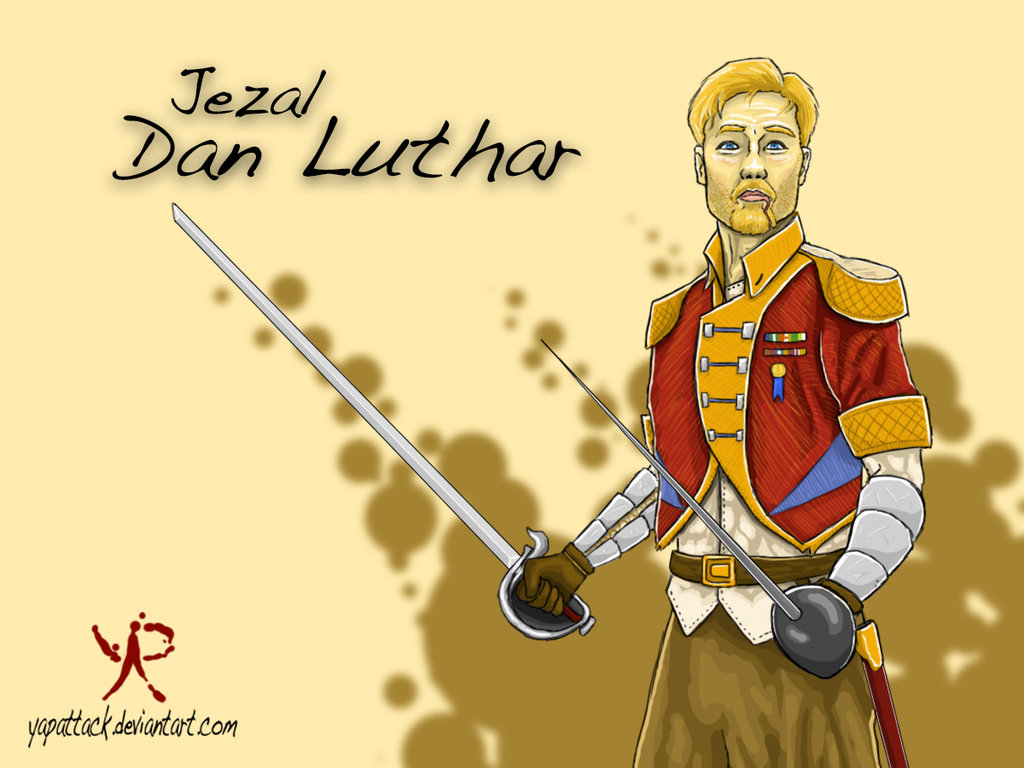
And then there is Jezal. A nobleman of the worst variety, a young man training for the Contest, a yearly fencing event that eager gentlemen throughout the Union engage in because winning brings fame and place within Union society. Hating Jezal is a given, even at the novels' end after (SPOILER: ) falling in love with a commoner, he still thinks the common soldier is beneath his notice. Still this classicism is so British that it adds a marvelous layer of reality to the novel. While kings and peasants are the bread and butter of fantasy, it is a rare novel that doesn't use some sort of diamond in the rough trope allowing the commoner to advance within society without facing the scorn of his betters. We like Jezal too, though it is unclear, aside from playing Mr. Darcy, what role he has in the action packed saga about to unfold.


Cliche: First there is The Barbarian. Logen is a man of the north. A common cliche in fantasy, most popularly used in Game of Thrones, as the peoples who live beyond the wall. Savage, scarred, filthy, wearing skins and uneducated. Think the Goths and the Visigoths and you won't be far off. Conan the Barbarian as envisioned by Howard is also probably the seminal work of Barbarian fiction.  Steven Erikson, as I've linked to before, has a neat essay on the concept of the Barbarian in fantasy.

Next there is the Old Wizard cliche: represented by the First of the Magi Bayaz. While Bayaz has no long grey beard or pointy hat, he does have the arrogance and the long lifespan of those who practice the art. Of course, Abercrombie puts his own twist to the cliche. Bayaz looks like a blacksmith and so far, no lightning bolts or fireballs. I won't spoil the magic for you, but it's there, and it's tastefully done. There is something off-putting about Bayaz.  Something vaguely distasteful, almost disingenuous about Bayaz.  Like he doesn't believe his own platitudes. 

Another new cliche for us is the First Law cliche. There is often something tongue and cheek about the First Law cliche, perhaps because speaking directly to the reader requires a deft touch, else it sound ham fisted and trite. It is a set of laws or principles which govern the system of magic, or other secretive or cliquish gathering.  Here the First law is that it is forbidden to touch the Other Side or speak with devils. The first law doesn't have much significance in this volume, though the second does, "it is forbidden to eat the flesh of humans." Other fine examples of the First Law cliche exist in the Wheel of Time, both in the repeated catechism against the Shadow, or in the rules for embracing the Source. It's a cliche, that done well, adds a sense of realism to the world, after all we do live in a world of laws and too often fantasy novels dispense with such mundanities.

The Middlemarche cliche. I've already mentioned it a bit, in my reference to Austen's Pride & Prejudice (the Pride and Prejudice Cliche just doesn't work as well)  the use of very classic forms of British class structure to inform the world. it's important to note that Abercrombie is British and as such has an implicit advantage over his Canadian and American contemporaries. In general I believe Erikson to be the leader of modern fantasy, but in this small aspect Erikson falls behind. Abercrombie's Jezal is so spot on detailing English snobbery it hurts.

The Evil Empire cliche and Migrating Other cliche: one thing I rather like about the First Law books and The Blade itself is that it has already painted two or three epic baddies who have nothing to do with the book's actual plot. This frees up the narrator to focus on the here and now while still allowing the book to expand into a series. I always hated the Wizard's First Law Books because the first two seemed like stand alone novels and the epic that emerged was appended to the first story with scotch tape. Not so here, we already have a variety of enemies and none of them are really central to any of the main characters. The Evil Empire cliche is often steeped in Orientalism, a West versus East, narrative. And while this is another racist element of fantasy as a genre, it remains, even today a pretty effective one: China and the Middle East remain bogeymen to most people and are great political fodder for applying motivational fear. In the Blade Itself we learn relatively little about the Empire. It is vast, it has a magical cadre of sorcerers known as Eaters, and it has a new, young emperor looking to earn his chops.

Then there is the King Beyond the Wall, a Mance Rayder type of baddy who is a Northman sweeping down to ravage the soft middle countries of the Union. This cliche is somewhat tired given the current popularity of Game of Thrones.
a Shanka, by rynomyte at Zbrushcentral

Last, there is a new cliche: the Migrating Other. History is a patina of competing movements of men, tribes coming north or south in droves and driving the current inhabitants further inland. The Migrating Other is the bad guy, even though he in turn flees another bad guy displacing him. In fantasy however, the Migrating Other can frequently be a race of non men, orcs or in this case the Flat Tops. Sanderson uses the Migrating Other cliche in the Way of Kings to describe the enemy with which the Kingdom is trapped in aimless and endless war.  The cliche by itself, though realistic enough, is generally not enough for fantasy. But, overpopulation, displacement, and finding food and resources simply does not provide the clear moral imperative that fantasy so often requires. So when used it's usually used in tandem with other cliches or as Abercrombie explains in the final pages (SPOILER) it is a race created by magic to serve as an army of destruction.

Completeness:Abercrombie has created a fully believable world with genuine, detailed characters. He also excels at the honourable mention: that writing technique in which a few lines of detailed text provides volumes of exposition. His listing of court lords and ladies is an excellent example of this. Though the Court has almost a non existent presence in the book, it still feels replete with characters that are differentiated, complete and ready to be picked up and exploited should the author need them. There's nothing more amateur hour then having a character added at the end to provide necessary information to end the story.  Also quite compelling its the idea of the Old Empire.  A great civilization destroyed by a war between magi, that has spent the following centuries in perpetual strife.
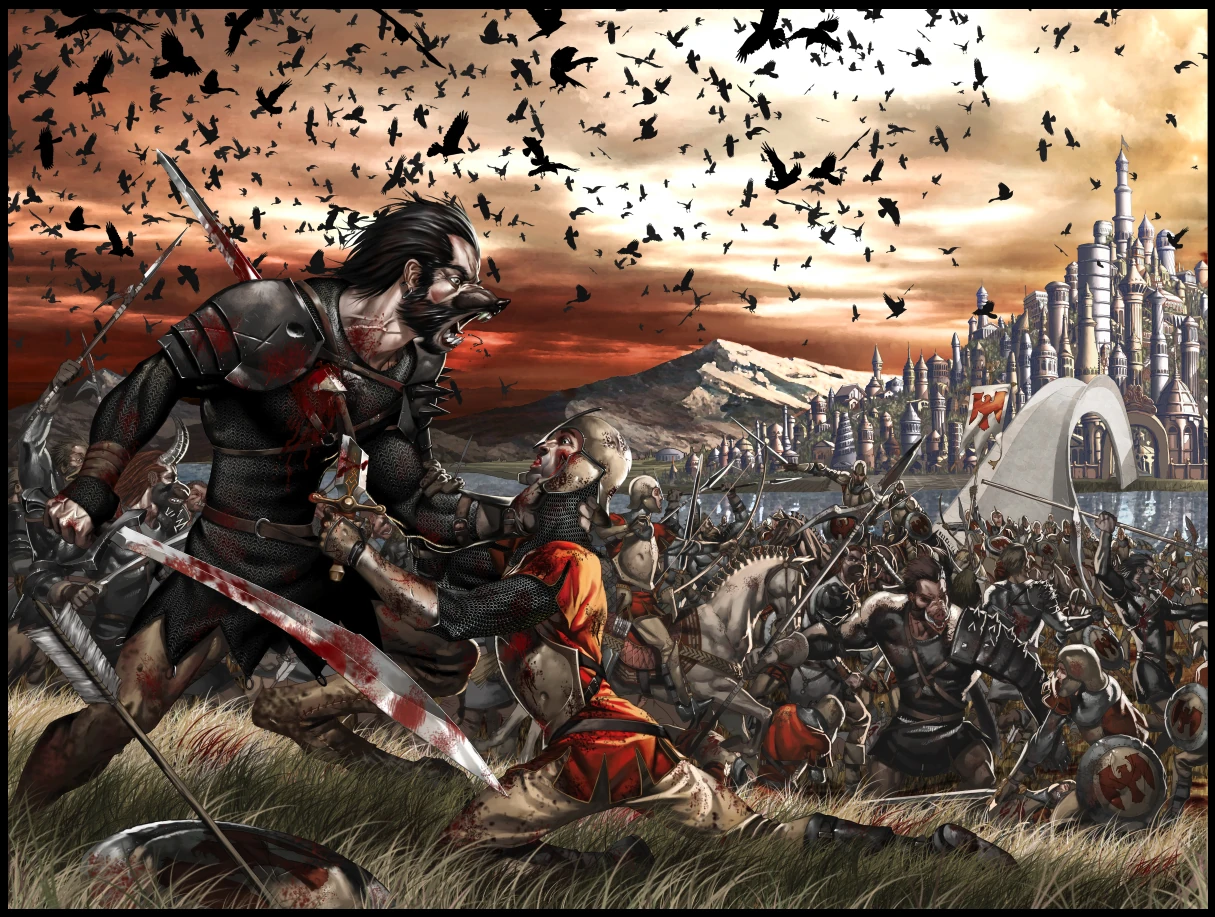
The fall of Manetheran, gorgeous, not sure whose image


The world feels completely fleshed out, easily a dozen nations are described or mentioned, though only three are relevant. Politics and trade seems real and even modern. As a fantasist with an interest in economics I was thrilled to see some discussion within the text of the economic relationships between provinces, the financing of the war with the Empire, a union bashing autocrat, and even discussion of crown and union debts.

Another delightful detail was in the small physical ticks the characters have: for example Logen Nine Fingers trims his blisters next to the fire, Marshal Burr has a weak stomach that causes him to burp unfortunately. These are the sort of details that really make a story sing.

But to top it all off. And I saw a reviewer (Mark Monday) on Goodreads mention this, the book is a truly funny read. It's dark humor, true enough, but the book is laugh out loud funny! Even my wife commented on my laughing while reading!

So, please give Abercrombie another chance, and my hats off to this new bright star in the realms of fantasy.